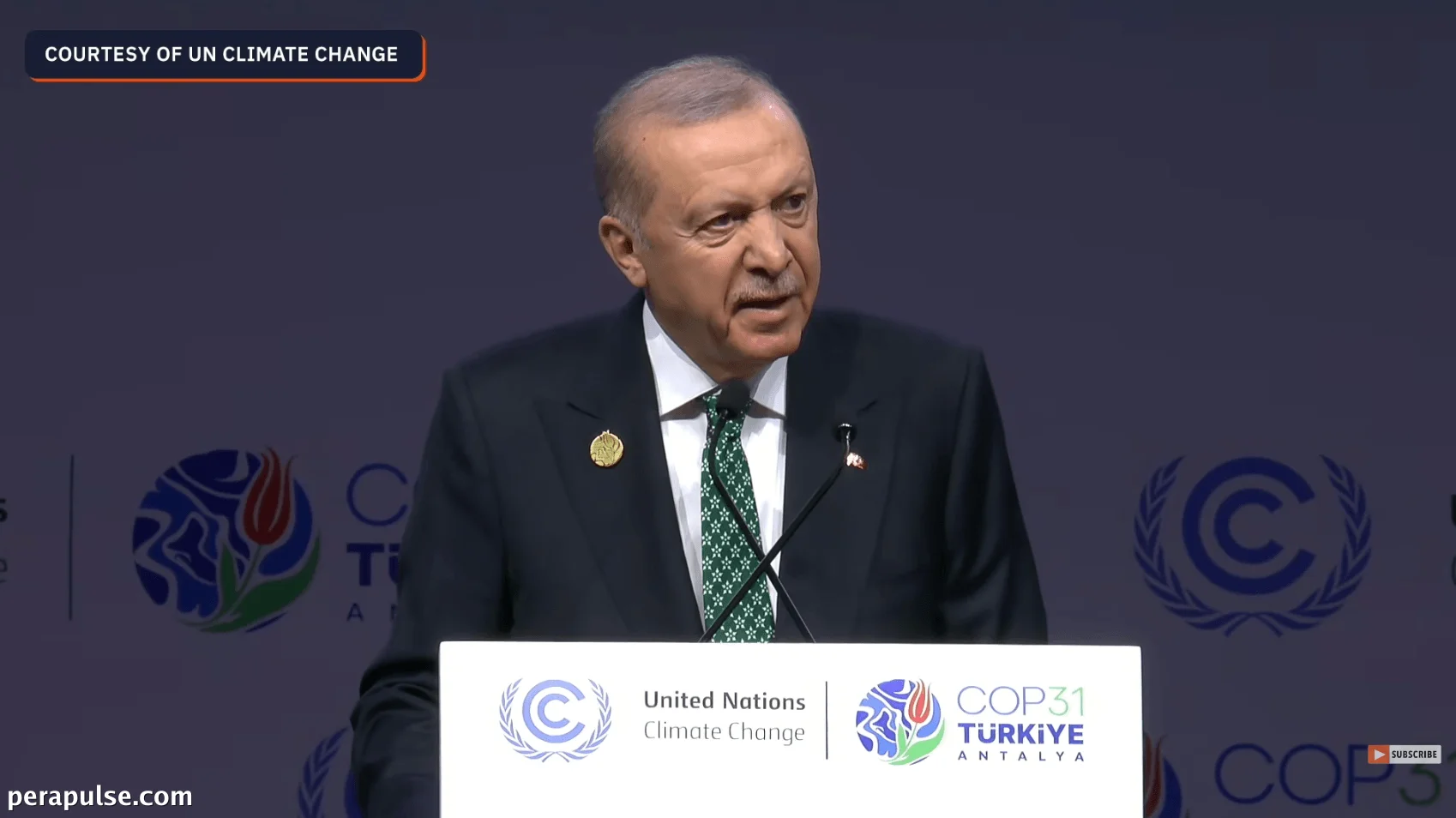
During the ongoing COP31 climate summit in Antalya, Turkey, President Recep Tayyip Erdogan labeled the war in Gaza as 'ecocide,' expressing deep concern over its environmental impact and calling for urgent humanitarian access.
Erdogan stated, 'What has taken place in Gaza is not only a genocide, but it is also an ecocide.' He pointed out the destruction of centuries-old olive trees and the pollution of soil and water in the region, highlighting the war's profound consequences on both the environment and local communities.
This year's COP31 is co-hosted by Turkey and Australia, bringing together world leaders to discuss various climate issues, including electrification targets and financial mechanisms for adapting to climate change.
Erdogan emphasized the shared responsibility of global leaders, stating, 'No one who sees, who knows of, or who witnesses such a shameful picture for humanity can possibly escape responsibility.' His remarks resonate amid rising tensions and calls for action against environmental degradation.
International Responses and Broader Context
The Israeli foreign ministry quickly dismissed Erdogan's comments, accusing him of perpetuating an 'anti-Israel campaign of lies.' This diplomatic friction underscores the complexities of addressing humanitarian crises while pursuing environmental goals.
In a parallel discussion, Iranian President Masoud Pezeshkian also criticized the environmental damage caused by ongoing conflicts, linking military actions to significant emissions of greenhouse gases. He described Gaza as a test of global conscience regarding justice and environmental protection.
The COP31 summit reflects a critical intersection between global climate action and pressing geopolitical issues, with leaders urged to prioritize both environmental sustainability and humanitarian needs.