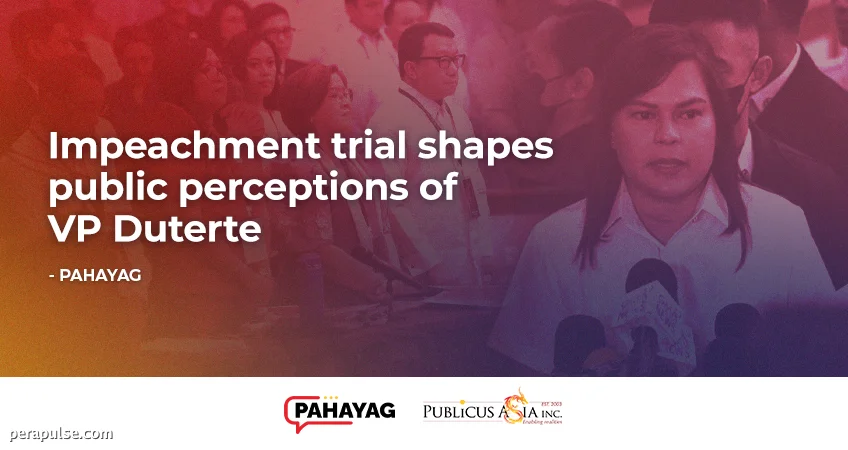
Vice President Sara Duterte's approval ratings have shown a modest increase, rising to 29% from 28% in the previous quarter, according to the latest survey results. However, about half of Filipinos still express dissatisfaction with her performance.
Public Sentiment Shaped by Recent Events
The Office of the Vice President (OVP) has garnered positive feedback due to its assistance during calamities, which 12% of respondents noted as a favorable factor influencing perceptions of Duterte's performance.
Visibility efforts by Duterte have also played a role, with 9% of voters citing her presence as a positive influence, especially in Mindanao, where support stands at 21%.
Contrarily, testimonies from OVP and Department of Education officials regarding Army Colonel Lachica and the use of confidential funds have sparked scrutiny. While 8% of voters reacted positively to these disclosures, 13% reported a negative impact, indicating growing concerns about transparency and accountability.
The proposed 2027 OVP budget, which is 11.7% lower than the previous year, has also been affected by these controversies, further shaping public perceptions.
Duterte's Character Traits Under Review
In terms of personal attributes, bravery is the trait most associated with Vice President Duterte, cited by 40% of respondents. Other traits noted include concern for fellow countrymen at 27% and love of country at 25%.
In contrast, other top national officials lack clear defining traits, with nearly half of registered voters unable to identify any characteristics.
The survey, PQ3-2026, was conducted from October 1-4, 2026, involving 1,581 registered Filipino voters with a margin of error of +/- 3%.
This independent research initiative is part of a broader effort by PAHAYAG and PUBLiCUS Asia Inc. to track public sentiment and perceptions of key political figures since 2017.