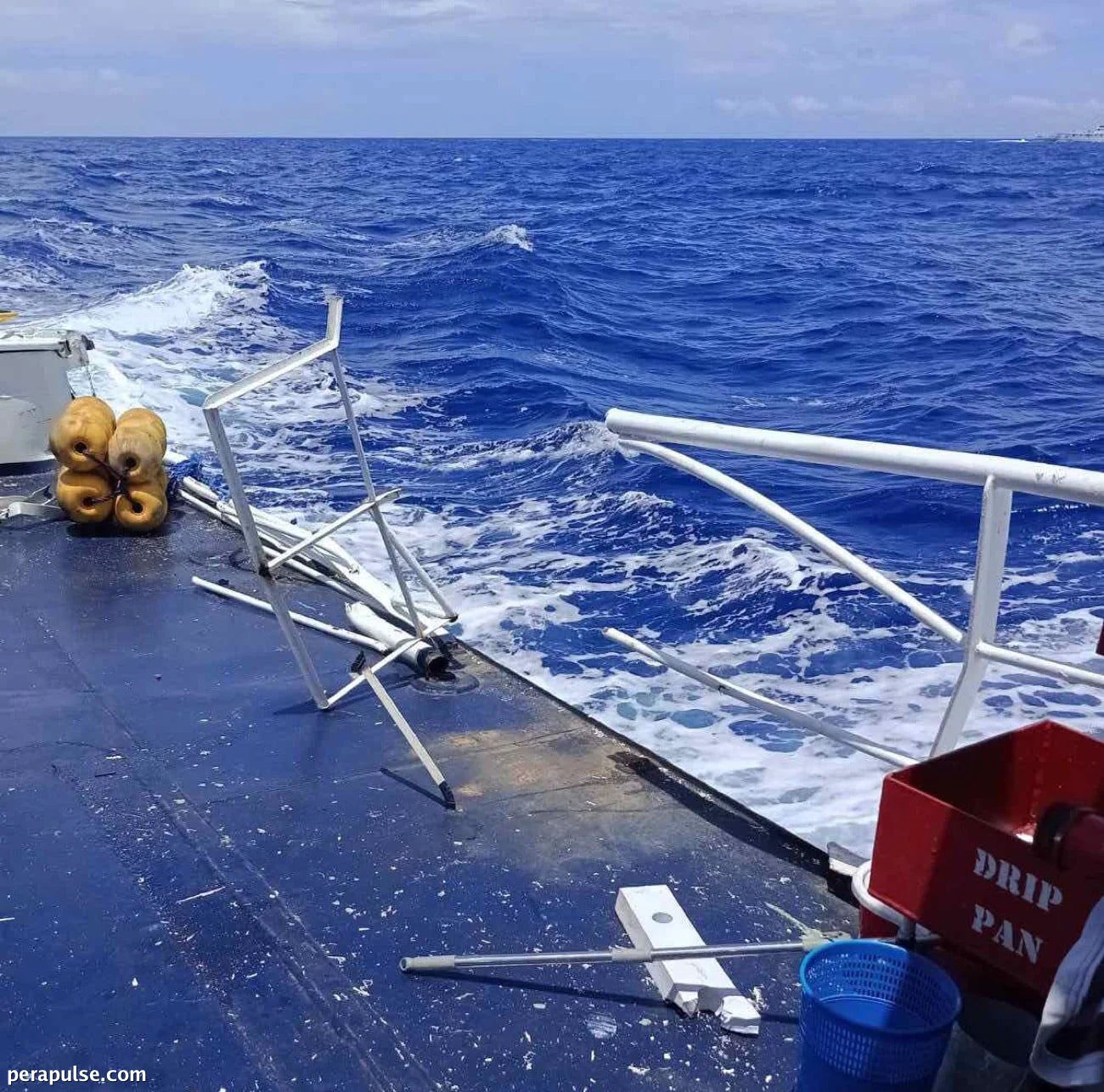
A Chinese Coast Guard vessel's ramming of a Philippine fisheries boat on September 18, 2026, has been deemed the closest such incident to the Philippine coast in recorded history. The incident occurred approximately 100 kilometers off Palawan, raising serious concerns over maritime safety and sovereignty.
Details of the Incident
The Bureau of Fisheries and Aquatic Resources' BRP Datu Magat Salamat was struck while en route to supply fuel to local fishermen. The Philippine Coast Guard (PCG) reported that the Chinese vessel, CCG-21585, collided with the starboard side of the BRP Datu Magat Salamat around 11:13 a.m. Rear Adm. Jay Tarriela, the PCG spokesperson, emphasized the intentional nature of the act.
Based on our record, this is the closest ever that China Coast Guard did this intentional ramming and disregarded the safety of our personnel.
Rear Adm. Jay Tarriela, Philippine Coast Guard
- Incident occurred 100 km off Palawan
- No injuries reported among crew members
- BRP Datu Magat Salamat sustained significant damage
The incident forced the BRP Datu Magat Salamat to return to Coron for repairs, after sustaining damage to its railings and deck fixtures.
China's Response
China has disputed the Philippine account, alleging that the BFAR vessel altered its course, leading to the collision. Chinese officials described their actions as part of standard operational procedures, which the National Task Force for the West Philippine Sea (NTF-WPS) categorically rejected.
The NTF-WPS condemned the Chinese Coast Guard's conduct as dangerous and unlawful, emphasizing the need for protection of Filipino fisherfolk and lawful government missions in the area.
Historical Context
This incident follows a series of confrontations in the West Philippine Sea, including water cannon attacks and close maneuvers by Chinese vessels against Philippine boats. The escalating tensions are a stark reminder of the ongoing territorial disputes and China's aggressive maritime strategies.
The Philippine government continues to assert its rights in the region, backed by international law, including the 2016 arbitral ruling that invalidated China's expansive claims over the South China Sea.