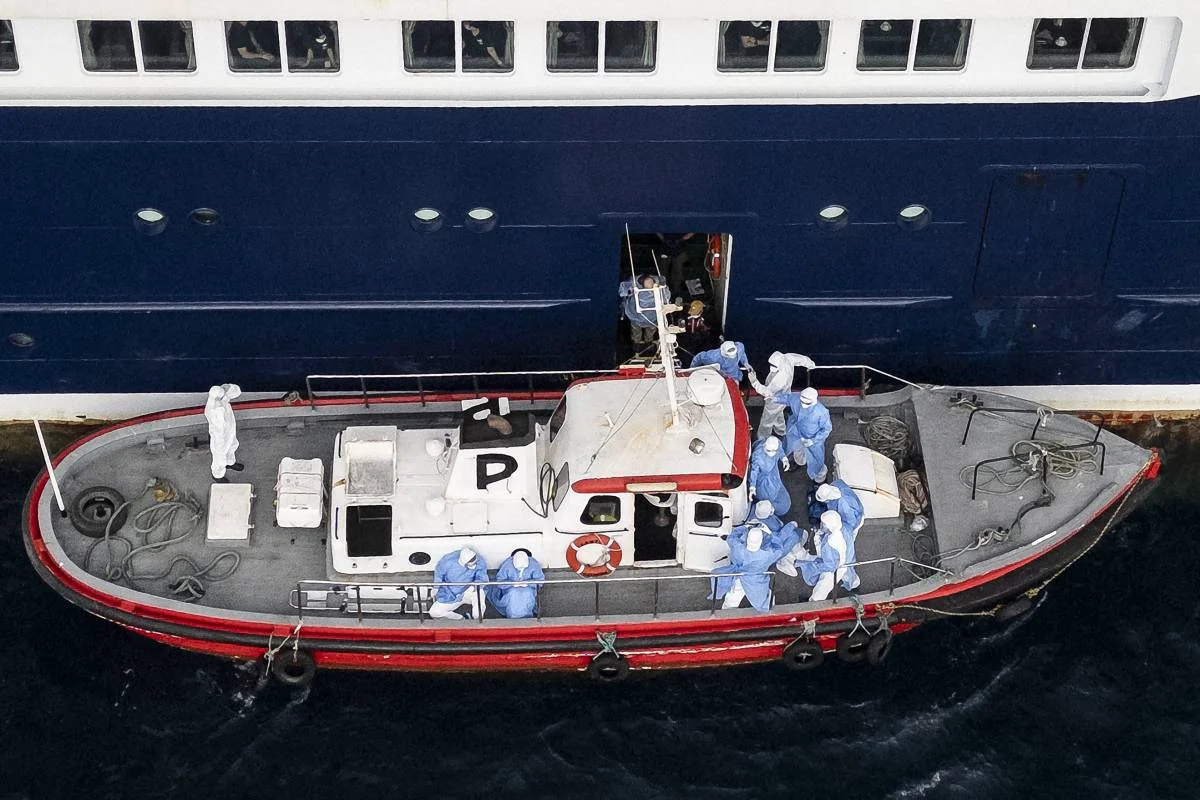
The World Health Organization (WHO) expressed concern on Thursday regarding a potential increase in hantavirus cases linked to a recent outbreak on the MV Hondius cruise ship. Despite the deaths of three passengers, health officials anticipate the situation to remain contained.
A sick individual from the cruise disembarked in Europe as the ship headed towards a Spanish island. WHO Director-General Tedros Adhanom Ghebreyesus confirmed that there were five confirmed cases and three suspected cases of the virus.
The Andes virus, a rare strain observed on the ship, is capable of human-to-human transmission. With the incubation period lasting up to six weeks, more cases may arise, according to Ghebreyesus.
We believe this will be a limited outbreak if the public health measures are implemented and solidarity shown across all countries.
Abdi Rahman Mahamud, WHO Emergency Alert Director
Health authorities are monitoring individuals in several countries, including the UK, Germany, and South Africa, who may have contracted the virus. However, WHO officials reassured the public that this is not the onset of an epidemic or pandemic.
Hantavirus is typically transmitted from infected rodents and can lead to severe respiratory and cardiac issues. Currently, there is no vaccine or cure, and treatment focuses on symptom relief.
The outbreak appears to have originated from a passenger who contracted the virus in Argentina before boarding the ship. One passenger died on April 11, and his body was removed on April 24.
Concerns escalated when the deceased man's wife also died 15 days later in South Africa, with confirmed hantavirus as the cause.
Health officials are tracing contacts from the commercial flight she took after leaving the cruise ship, while a German passenger also succumbed to the virus on May 2.
As the Hondius continues its journey to Tenerife, the operator reported no symptomatic individuals currently on board.