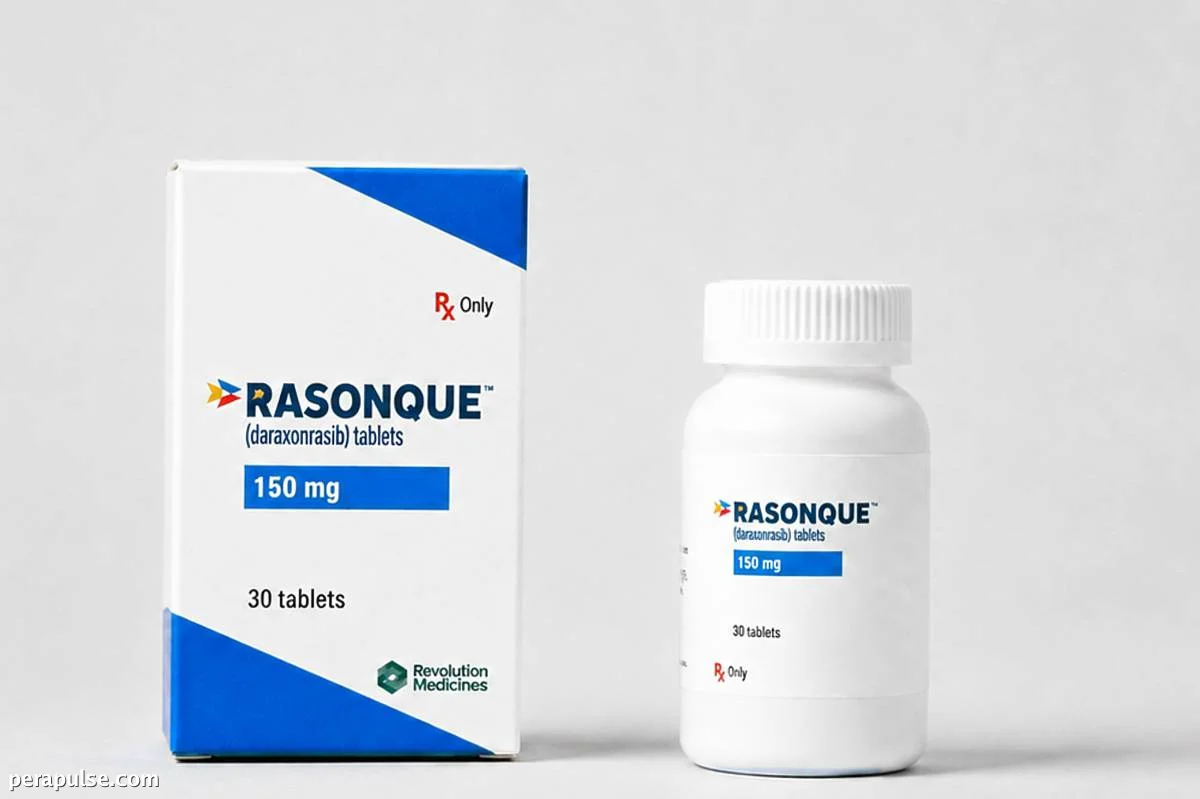
The U.S. Food and Drug Administration (FDA) has approved daraxonrasib, a groundbreaking oral medication for advanced pancreatic cancer, promising a more effective treatment for patients battling this aggressive disease.
A Game-Changer for Pancreatic Cancer Patients
Known by the brand name Rasonque, daraxonrasib is aimed at inhibiting a mutated protein that drives tumor growth in over 90% of pancreatic cancer cases. This innovative approach was elusive for decades, making the approval a landmark achievement.
This is one of the most anticipated approvals I can think of. This medicine is not a cure but a significant improvement.
Dr. Andrew Coveler, Fred Hutch Cancer Center
- Patients taking daraxonrasib saw median survival rise to 13.2 months, compared to 6.7 months for chemotherapy.
- The drug is priced at approximately $39,800 for a one-month supply.
In clinical trials involving 500 patients whose cancer had become resistant to previous treatments, those receiving daraxonrasib experienced fewer severe side effects, such as skin rashes and digestive issues.
Pancreatic cancer remains one of the deadliest cancers, with the American Cancer Society projecting 67,000 new cases and over 52,000 deaths in the U.S. this year alone.
Notably, public interest in the drug surged earlier this year after former Senator Ben Sasse shared his positive experience on CBS' '60 Minutes,' highlighting reduced pain while using the treatment.
The FDA's expedited approval process saw the drug getting the green light over six months ahead of schedule, emphasizing the agency's commitment to delivering effective treatments swiftly.
Daraxonrasib targets KRAS mutations, which are critical for the development of pancreatic tumors. This represents a significant breakthrough, as these mutations have long been deemed 'undruggable'.
Experts believe that this approval may not only benefit pancreatic cancer treatment but could also lead to advancements in therapies for other cancers, with numerous experimental drugs currently under development.
Revolution Medicines, the company behind the drug, plans further studies to explore its potential against various cancers, including lung cancer.