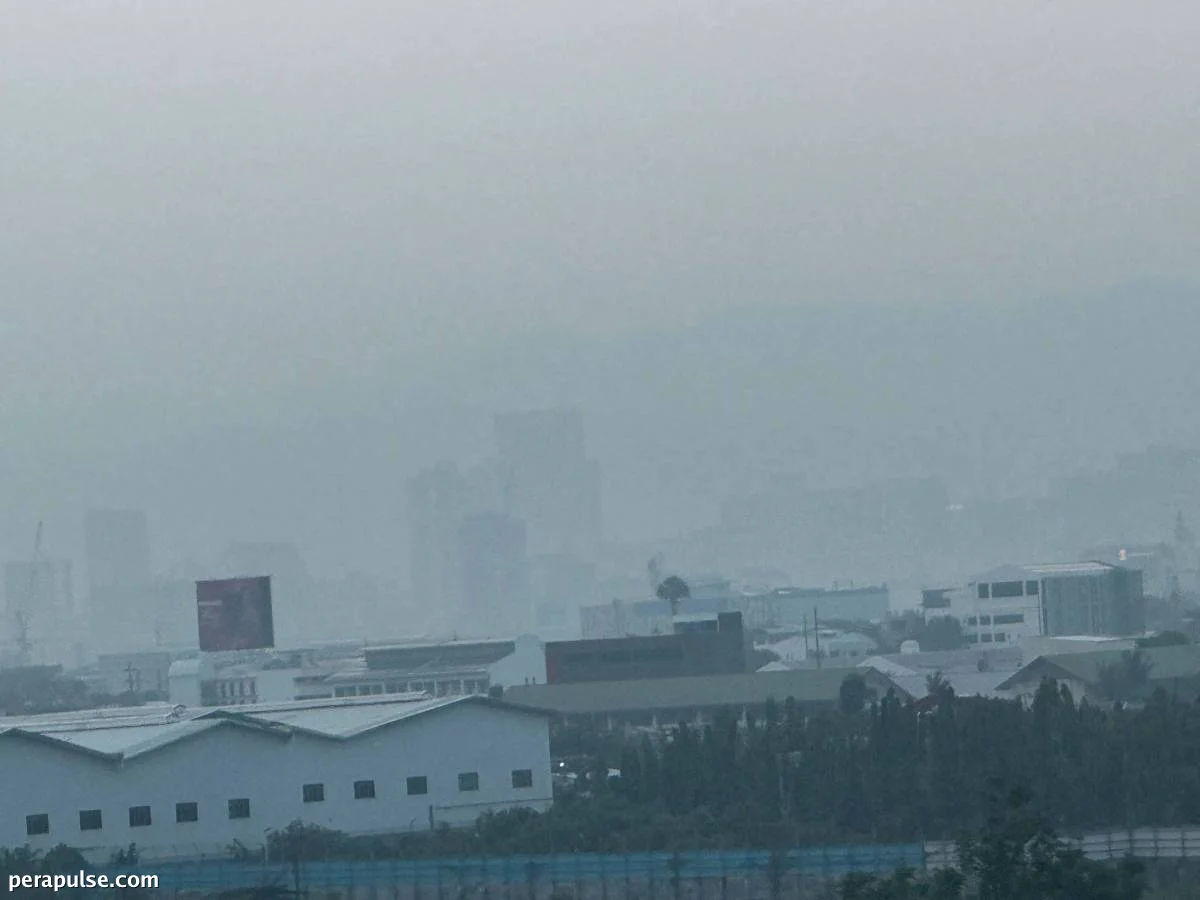
Metro Cebu's air quality has sharply declined, with the Air Quality Index (AQI) reaching an alarming 215 on Wednesday afternoon. This prompted several local governments to suspend face-to-face classes in public schools.
The Environmental Management Bureau Central Visayas (EMB-7) reported AQI levels of 203 at 6 a.m., 208 at 11 a.m., and 215 by 3 p.m. in Talisay City, categorizing the air quality as 'acutely unhealthy'.
Health Risks and Government Response
Residents should reduce outdoor exertion at the current AQI level. People with heart or respiratory conditions are advised to stay indoors and rest as much as possible.
Environmental Management Bureau Central Visayas
In response to the deteriorating air quality, Talisay City Mayor Samsam Gullas announced the suspension of in-person classes for public schools on Thursday. He advised students who were already in class to remain indoors.
Carcar City and Minglanilla followed suit, suspending classes after receiving similar reports from EMB-7. Private schools were given discretion to decide based on the safety of their students.
Causes of Air Quality Decline
The EMB-7 attributed the haze to smoke and fine particulate matter from ongoing forest fires in Kalimantan, Indonesia, propelled toward the Philippines by the southwest monsoon.
The pollutants, particularly PM2.5 particles, can linger in the atmosphere and pose health risks to residents, extending the impact beyond Metro Cebu to areas like the Camotes Islands.
Similar conditions were experienced in October 2015, when air quality also suffered due to Indonesian forest fires.
Cebu Governor Pamela Baricuatro stated that the provincial government is closely monitoring the situation through various agencies. EMB-7 cautioned that the haze could persist as long as the forest fires remain active.