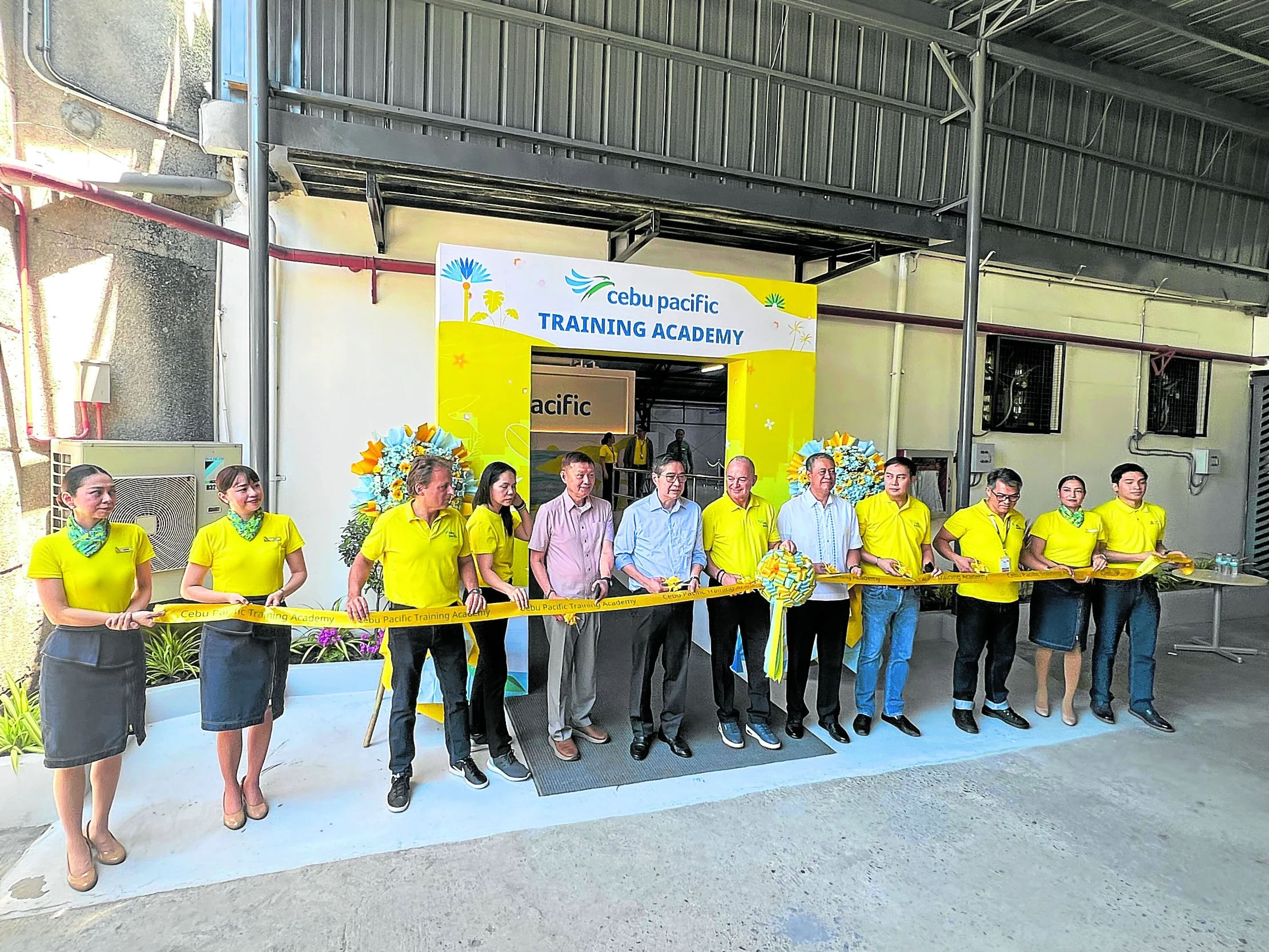
Inilunsad ng Cebu Pacific ang kanilang pangunahing training facility sa Lungsod ng Parañaque noong Abril 27, na nagmamarka ng makabuluhang pamumuhunan sa pagsasanay sa aviation.
Ang 1,685-square-meter hub ay nilagyan ng mga advanced training tools, kabilang ang Airbus A330 at ATR door trainers, cabin mockups, at emergency slide trainers.
Ang pasilidad na ito ay dinisenyo upang magbigay ng hands-on, scenario-based instruction para sa parehong inflight at ground procedures, na mahalaga para sa operational safety ng airline.
Binigyang-diin ni Cebu Pacific CEO Mike Szucs ang kahalagahan ng pasilidad na ito bilang isang mahalagang imprastruktura na sumusuporta sa estratehiya ng pagpapalawak ng airline, lalo na pagkatapos ng kanilang makasaysayang order ng 152 aircraft.
Kailangan nating tiyakin na mayroon tayong tuloy-tuloy na suplay ng mahusay na sinanay na lokal na mga Pilipino.
Mike Szucs, Cebu Pacific CEO
Ang training hub ay pangunahing nakatuon sa pagsasanay ng cabin crew, habang ang pagsasanay ng piloto ay patuloy na isasagawa sa pasilidad ng airline sa Clark, Pampanga.
Tinutukoy ni Chairman Lance Gokongwei na ang pamumuhunang ito ay sumasalamin sa pangako ng Cebu Pacific sa kaligtasan, operational efficiency, at pag-unlad ng talento ng mga Pilipino.
Pangako sa Kahusayan
Pinahusay din ng Cebu Pacific ang kanilang talent pipeline sa pamamagitan ng mga inisyatiba tulad ng muling binuhay na Cadet Pilot Program, na nagbibigay ng nakabalangkas na pagsasanay at job placement.
Sa kasalukuyan, ang training facility ay eksklusibo para sa mga empleyado ng Cebu Pacific, ngunit naglalayon ang kumpanya na itaas ang mga pamantayan ng industriya sa buong Pilipinas.
Sa pasilidad na ito, layunin din naming makapag-ambag ng makabuluhan sa pag-unlad ng mga pamantayan ng pagsasanay sa aviation sa Pilipinas.
Javier Massot, COO
Pinalakas ng airline ang recruitment ng cabin crew upang suportahan ang lumalawak na network ng 35 domestic at 26 international destinations.
Sa kabila ng mga hamon na dulot ng tumataas na operating costs, nananatiling optimistiko si Szucs tungkol sa hinaharap, na tinatawag ang training academy bilang isang pangmatagalang pamumuhunan.
Ito ay isang pamumuhunan para sa susunod na 25 taon. Ang layunin ay may magandang hinaharap para sa Pilipinas, isang magandang hinaharap para sa Cebu Pacific.
Mike Szucs