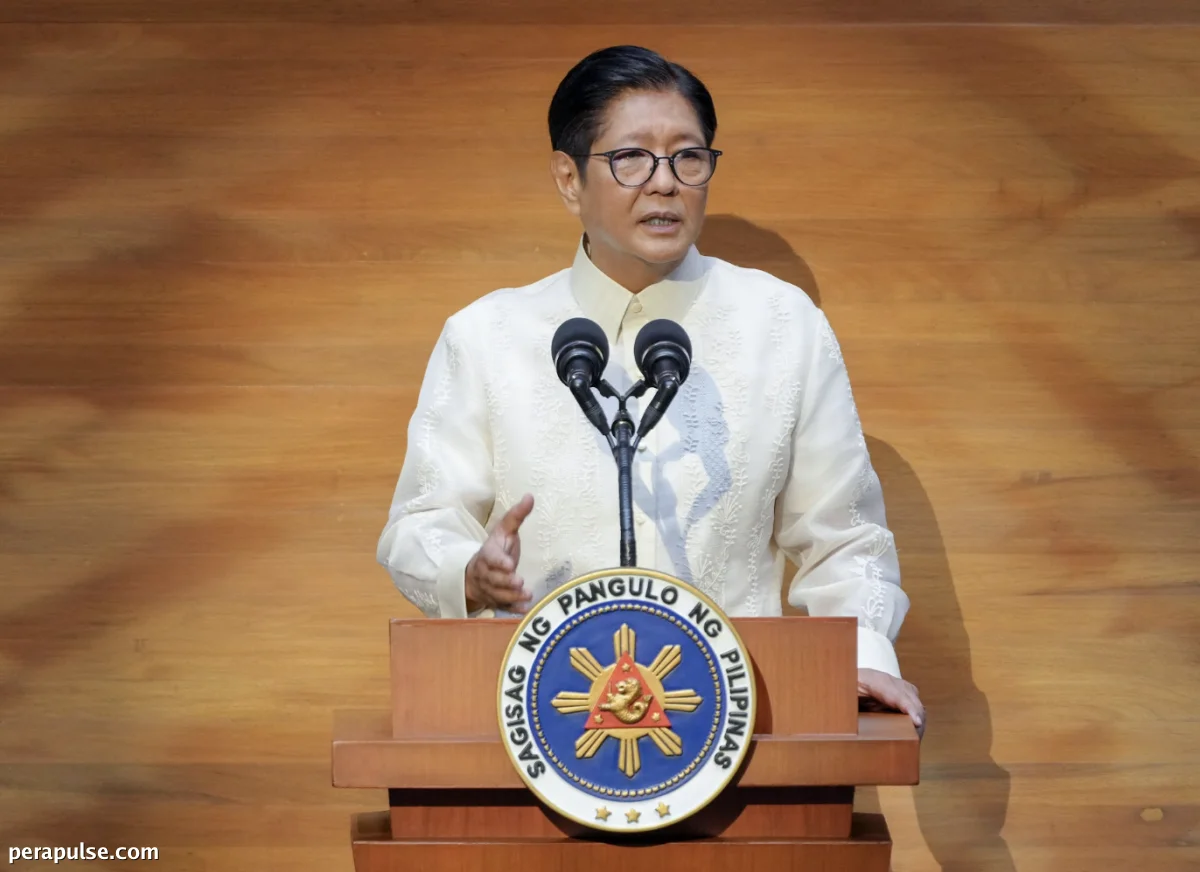
The Department of Trade and Industry (DTI) marks its 45th anniversary, coinciding with President Ferdinand Marcos Jr.'s fifth State of the Nation Address (SONA), highlighting a renewed focus on economic security.
Emphasizing Economic Resilience
The government's mission should go beyond helping Filipinos weather crises and focus on ensuring the country's security and self-sufficiency.
President Ferdinand Marcos Jr.
While the DTI continues its longstanding commitment to supporting micro, small, and medium enterprises (MSMEs), the economic landscape has evolved. The Philippines is actively seeking new markets and attracting investments to create jobs and integrate into global value chains.
Currently, the country has 23 free trade agreements, with notable mentions including the Regional Comprehensive Economic Partnership. Marcos emphasized the importance of diversifying exports to enhance the country's competitive edge.
Strategic Industries for Growth
Marcos identified pharmaceuticals, advanced manufacturing, and technology as key sectors for development. The DTI aims to drive industrial growth amid these changing priorities, leveraging over P6 trillion in investments facilitated through Green Lanes, projected to create more than 400,000 jobs.
Economic zones outside Metro Manila are set to expand, with new areas in Dumaguete and Misamis Oriental. This decentralization could foster local economic growth and job creation.
Harnessing AI and Electric Mobility
A significant focus is on industries related to artificial intelligence and electric mobility. The planned Pax Silica Industrial Hub aims to integrate AI into advanced manufacturing, enhancing the Philippines' role in the global tech landscape.
In addition, the government has removed tariffs on electric vehicles until 2028, prioritizing the development of local assembly and supply chains to capitalize on the growing demand for EVs.
Supporting MSMEs and Digital Integration
DTI remains committed to supporting MSMEs, recognizing their crucial role in the economy. Marcos called for tax relief measures to promote growth and socioeconomic sustainability.
The ASEAN Digital Economy Framework is poised to enhance cross-border transactions, benefiting MSMEs by fostering financial inclusion and enabling access to technology.
Future Directions for DTI
As Trade Secretary Cristina Roque prepares to lead DTI into its next chapter, her challenge will be to unify efforts in exports, investment promotion, and consumer protection under a cohesive industrial strategy.
With a focus on resilience, innovation, and global competitiveness, DTI's approach will be crucial in navigating an increasingly complex economic landscape. The department's ability to transform investments into tangible benefits for local industries and workers will determine the Philippines' future in global supply chains.
