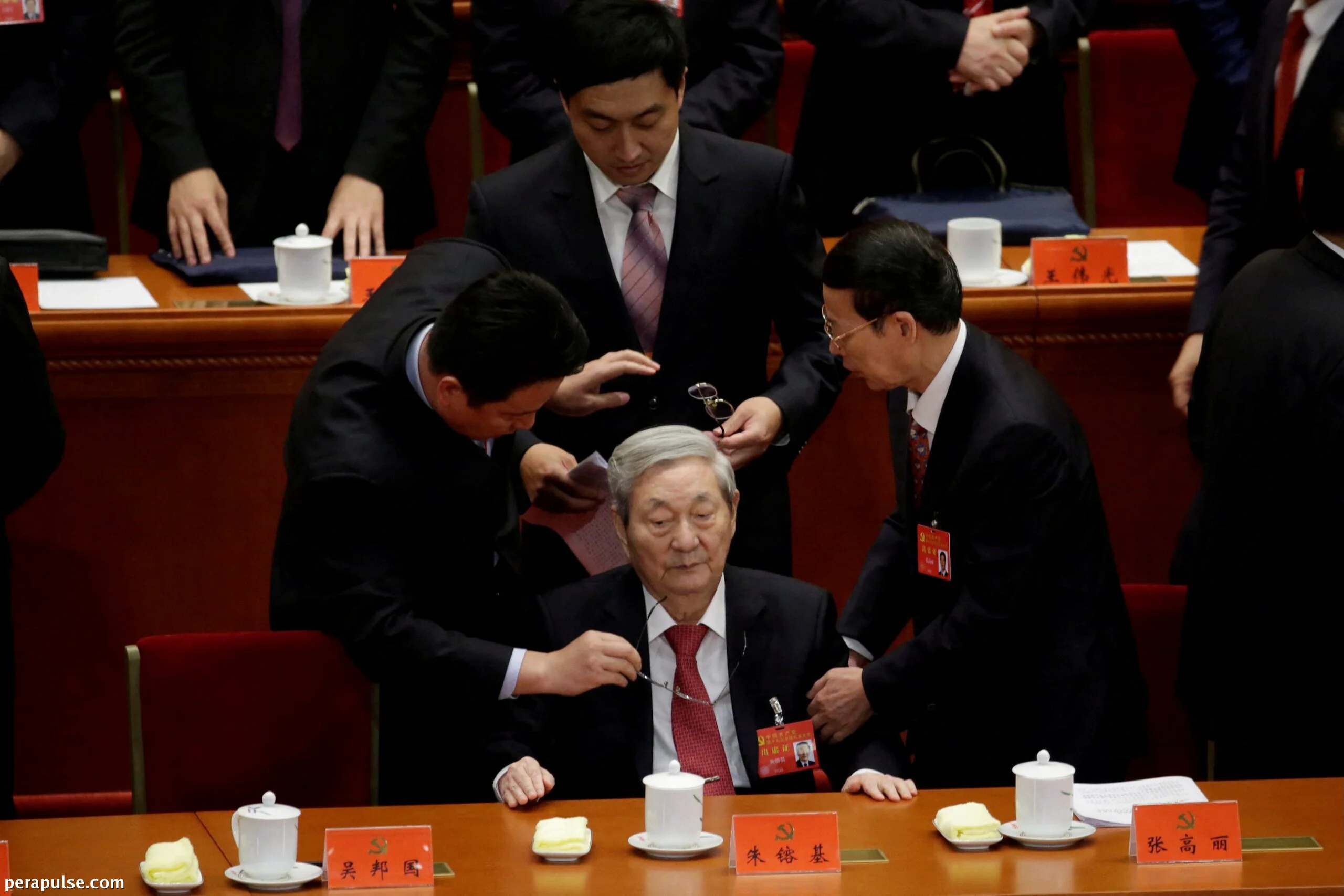
Si Zhu Rongji, ang dating punong ministro ng Tsina, ay pumanaw noong Agosto 12 sa edad na 97. Ang kanyang panunungkulan ay tinukoy ng mga mapanlikhang reporma sa ekonomiya na nagdala sa Tsina sa pandaigdigang entablado.
Isang Tapat na Boses sa Pamumuno
Ang ating bansa ay humaharap sa maraming potensyal na krisis na maaaring sumiklab anumang oras... Lalo na, mayroong katiwalian sa mga opisyal, ang agwat sa pagitan ng mayaman at mahirap.
Zhu Rongji
- Si Zhu ay kilala sa kanyang mga tapat na talumpati na umuugong sa publiko ng Tsina.
- Kabilang sa kanyang mga patakaran ang pribatisasyon ng mga pag-aari ng estado at mga reporma sa buwis.
Ang tuwid na istilo ng komunikasyon ni Zhu ay nagbigay-diin sa kanya mula sa kanyang mga naunang pinuno. Ang kanyang mga talumpati ay madalas na tumatalakay sa mga isyu tulad ng katiwalian at mga pagkukulang sa pamamahala, na nagpasikat sa kanya sa mga mamamayan na naghahanap ng transparency.
Isang nagtapos ng Tsinghua University sa Beijing, sumali si Zhu sa Partido Komunista noong 1949 at umangat sa mga ranggo matapos na ma-rehabilitate sa politika pagkatapos ng Kulturang Rebolusyon. Ang kanyang maagang papel bilang alkalde ng Shanghai ay naglatag ng pundasyon para sa hinaharap ng lungsod bilang isang pandaigdigang sentro ng pananalapi.
Ang kanyang panahon bilang punong ministro mula 1998 hanggang 2003 ay nailarawan ng mga agresibong reporma, kabilang ang pribatisasyon ng mga kumpanya ng estado at makabuluhang pagbabago sa patakaran sa ekonomiya. Siya ay may mahalagang papel sa pagpasok ng Tsina sa World Trade Organization noong 2002, na nag-navigate sa mga kumplikadong negosasyon na marami ang tumingin bilang mapanganib.
Sa kabila ng kanyang mga tagumpay, ang mga patakaran ni Zhu ay hindi nakaligtas sa kritisismo. Napansin ng mga tagamasid na ang ilan sa kanyang mga reporma ay nagdulot ng mga hamon na kailangang harapin ng mga susunod na pinuno, kabilang ang mga isyu sa patakaran sa agrikultura at hindi pagkakapantay-pantay sa ekonomiya.
Ang kanyang pamana ay patuloy na nag-uudyok ng debate sa mga opisyal at intelektwal na may pananaw sa reporma, na madalas na tumutukoy sa panahon ni Zhu bilang isang panahon na angkop para sa mga matapang na pagbabago sa pamamahala at estratehiya sa ekonomiya.