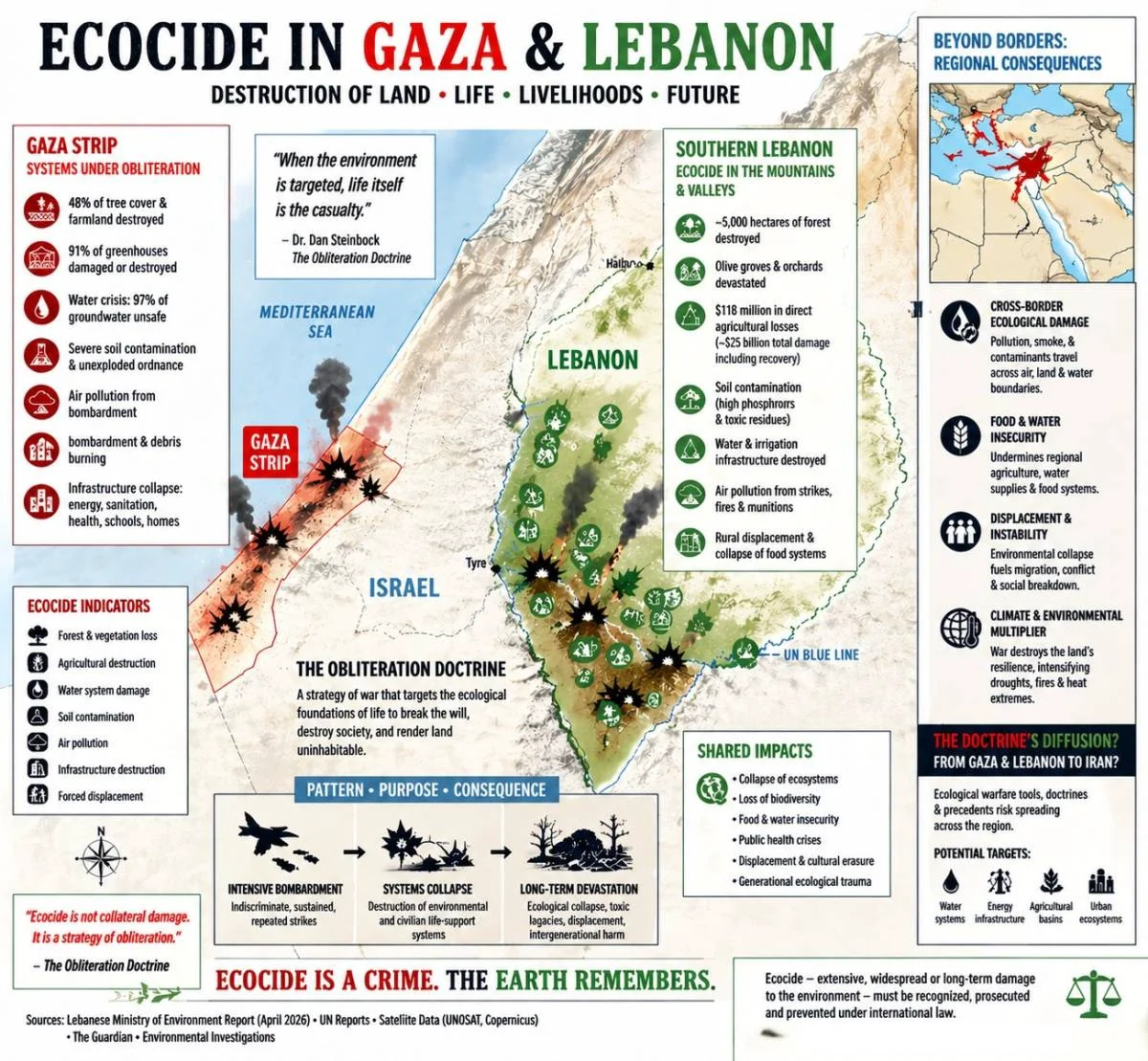
Inakusahan ng ministeryo ng kapaligiran ng Lebanon ang Israel na gumawa ng ecocide, na iniuugnay ang pagkasira sa Lebanon sa patuloy na labanan sa Gaza. Itinatampok ng ulat ng ministeryo ang sistematikong pagkasira ng kapaligiran sa panahon ng digmaan noong 2023–2024.
Ipinapakita ng mga natuklasan na higit sa 5,000 ektarya ng kagubatan ang nawasak kasama ng makabuluhang pagkalugi sa agrikultura, na umaabot sa tinatayang $118 milyon sa direktang pinsala sa imprastruktura.
Nireport din ang kontaminasyon ng lupa at polusyon sa hangin mula sa mga paulit-ulit na pag-atake, kasama ang pagkasira ng mga sistema ng irigasyon at mga taniman.
Sinasabi ng mga internasyonal na pagsusuri na ang kabuuang pasanin ng pinsala ay maaaring lumampas sa $25 bilyon kapag isinama ang mga gastos sa pagbawi at pagkalugi sa ekonomiya.
Ang sitwasyong ito ay nakikita bilang bahagi ng mas malawak na trend kung saan ang pagkasira ng kapaligiran ay hindi lamang collateral damage kundi isang estratehikong bahagi ng mga operasyong militar.
Ang Doktrina ng Pagwawasak at ang mga Impluwensya nito
Ang konsepto ng 'Doktrina ng Pagwawasak' ay ipinakilala upang ilarawan ang isang estratehiyang militar na pinagsasama ang mga patakaran ng sunog na lupa sa hindi mapanlikhang pambobomba.
Ang doktrinang ito ay nag-uugnay ng mga aksyon militar sa pagkasira ng mga ekolohikal at imprastruktural na sistema, na nagdudulot ng seryosong mga alalahanin tungkol sa pagsunod sa internasyonal na batas.
Ipinapakita ng mga ulat na ang Gaza ay nakaranas ng katulad na mga pattern ng pagkasira, kabilang ang malawakang pagbagsak ng kapaligiran at matinding kontaminasyon ng tubig at lupa.
Paghahambing na Pagsusuri: Lebanon at Gaza
Ang ulat ng Lebanon ay nag-uugnay ng mga pagkakatulad sa mga taktika na ginamit sa Gaza at mga kasalukuyang ginagamit sa Lebanon, kabilang ang pagkasira ng mga ekolohikal na sistema ng agrikultura at pagtutok sa imprastruktura ng tubig.
Parehong rehiyon ay nakakaranas ng sistematikong pag-atake na nagbabanta sa kanilang ekolohikal na kakayahan, na maaaring isalin bilang isang anyo ng etnikong paglilinis.
Mas Malawak na Mga Bunga ng Pagkasira ng Ekolohiya
Ang pinsalang pangkapaligiran na dulot ng labanan ay umaabot lampas sa Lebanon at Gaza, na nakakaapekto sa mga rehiyonal na ekosistema at katatagan ng agrikultura.
Ang kahinaan sa ekonomiya at kawalang-seguridad sa pagkain ay mga makabuluhang panganib, habang ang paulit-ulit na pagkasira ng imprastruktura ay nagpapataas ng pag-asa sa mga pag-import ng pagkain at nagdudulot ng depopulasyon sa kanayunan.
Bukod dito, ang matagal na labanan ay maaari ring magkaroon ng masamang epekto sa sariling mga sistema ng kapaligiran ng Israel, na nagha-highlight ng pagkakaugnay-ugnay ng mga isyung ito.
Isang Paglipat sa mga Praktis ng Digmaan
Ang kasalukuyang landas ng labanan ay nagpapahiwatig ng isang paglipat mula sa tradisyunal na teritoryal na digmaan patungo sa isa na tumutok sa ekolohikal na imprastruktura, na pangunahing binabago ang kalikasan ng pakikilahok sa militar.
Habang ang digmaan ay lalong nakakaapekto sa mga ekolohikal na sistema, ang potensyal para sa ecocide sa ilalim ng internasyonal na batas ay nagiging isang agarang alalahanin.
Ang mga implikasyon ng ganitong mga praktis ay maaaring humantong sa malawakang pagkawasak ng ekolohiya sa iba't ibang rehiyon, na binibigyang-diin ang pangangailangan para sa agarang atensyong internasyonal.