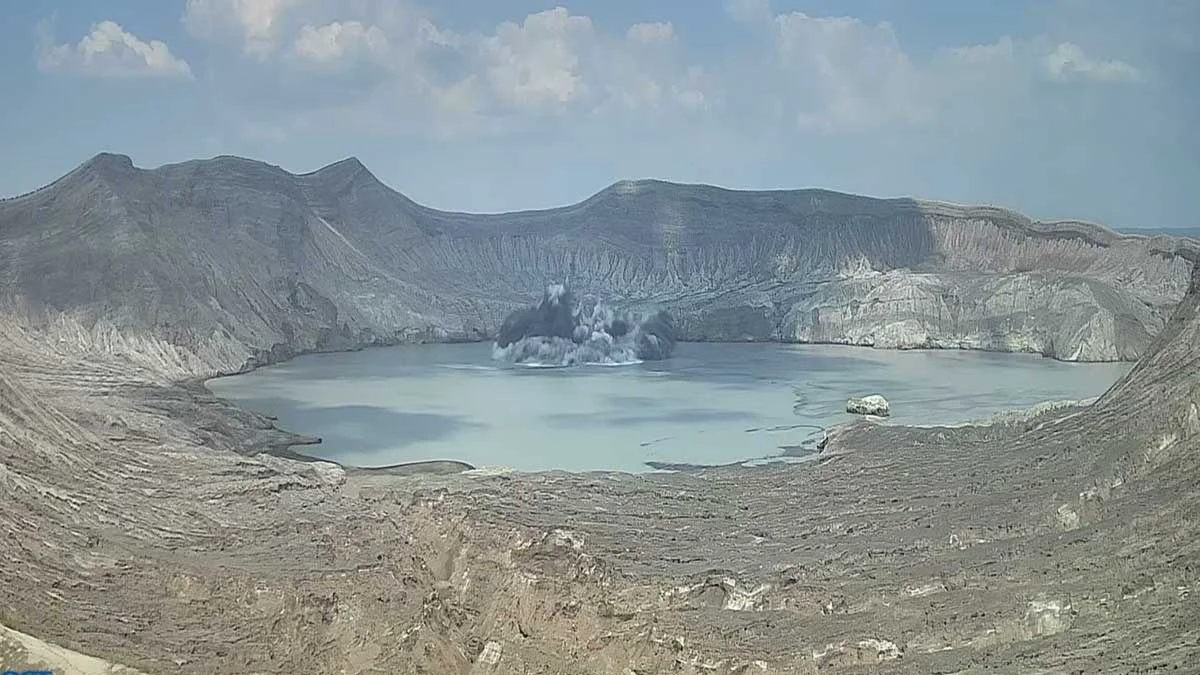
Ang Philippine Institute of Volcanology and Seismology (Phivolcs) ay nag-ulat ng kapansin-pansing pagtaas sa sulfur dioxide emissions mula sa Taal Volcano. Noong Mayo 8, ang bulkan ay naglabas ng 653 metric tons ng sulfur dioxide, isang bilang na higit sa doble ng 308 metric tons na naitala isang araw bago iyon.
Sa kabila ng pagtaas na ito sa emissions, inuri ng Phivolcs ang aktibidad bilang 'mahina na emission,' na may mga ulap na umabot sa taas na 600 metro.
Seismic Activity at Volcanic Earthquakes
Ang seismic activity ng bulkan ay tumindi rin, na nagrehistro ng siyam na volcanic earthquakes at isang dalawang minutong volcanic tremor sa panahon ng pagmamanman. Mula Mayo 5 hanggang 7, nadetect ng Phivolcs ang 22 volcanic earthquakes, isang makabuluhang pagtaas mula sa nakaraang tatlong araw na panahon, na nagrehistro lamang ng siyam.
Ang mga volcanic earthquakes ay nagmumula sa mga prosesong magmatiko na nagaganap sa ilalim o malapit sa bulkan, habang ang mga tremor ay mga low-frequency signals na karaniwang nauugnay sa aktibidad ng bulkan.
(cite: Phivolcs)
Walang mga palatandaan ng mainit na volcanic fluid na umaakyat na naobserbahan sa pangunahing crater lake sa Taal Volcano Island, at walang volcanic smog, o 'vog,' ang nadetect sa panahong ito.
Sa kabila ng tumaas na emissions at seismic activity, ang Taal Volcano ay nananatiling nasa Alert Level 1, na nagpapahiwatig ng mababang antas ng kaguluhan. Nagbigay ng babala ang Phivolcs na ang status na ito ay hindi dapat magdulot ng complacency, dahil ang bulkan ay nasa abnormal na kondisyon pa rin.
Binigyang-diin ng ahensya na ang banta ng eruptive activity ay nananatili at hinimok ang publiko na manatiling mapagmatyag.