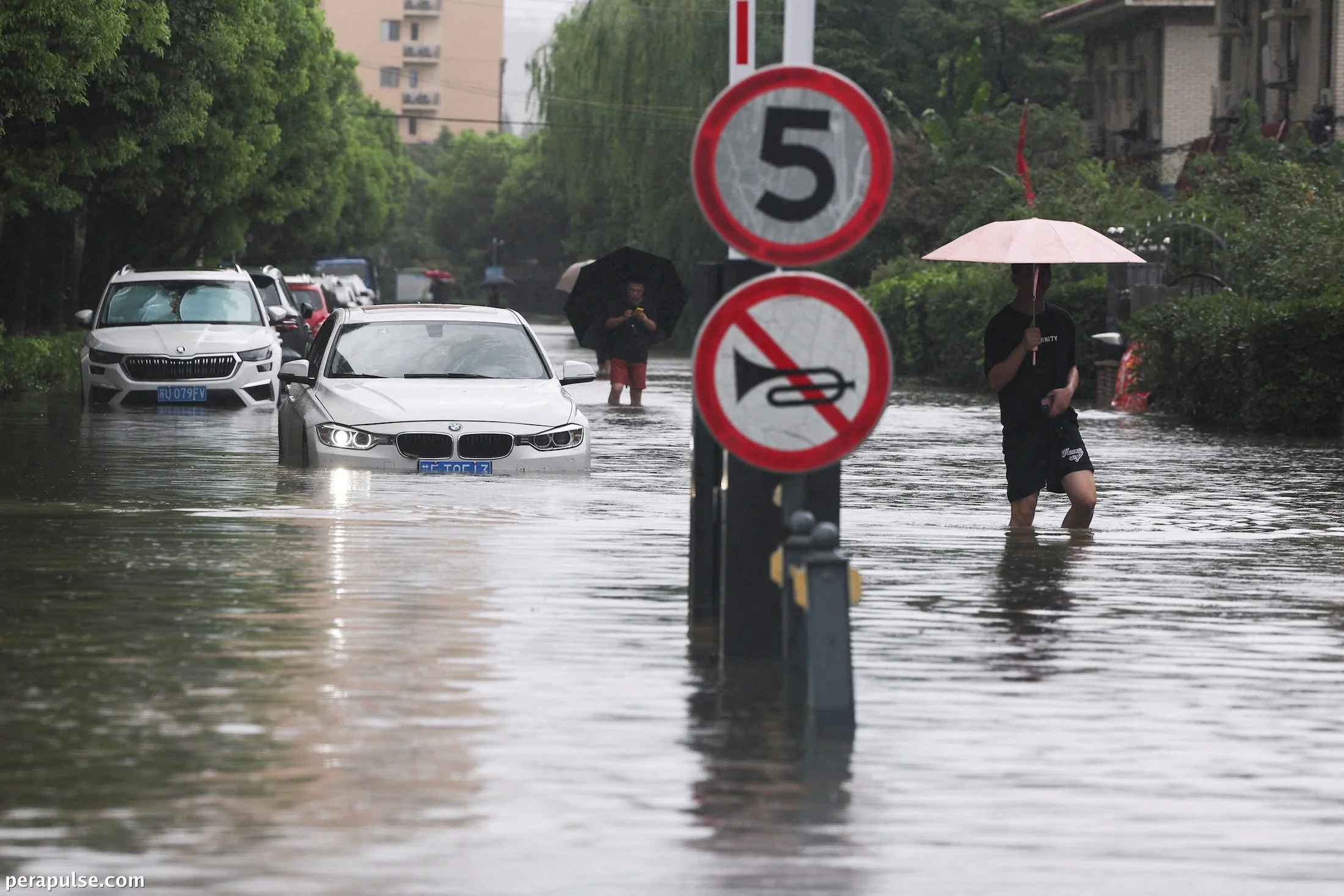
Ang Beijing ay nahihirapan mula sa mga epekto ng Bagyong Dolphin, na itinuring na pinakamalakas na bagyo ng taon para sa Tsina. Ang kabisera ay nakaranas ng matinding ulan na nagdulot ng malaking pagbaha, na nagresulta sa mga kalsadang hindi madaanan at nag-iwan ng maraming sasakyan.
Matinding Pagkaabala sa Panahon sa Iba't Ibang Rehiyon
Idineklara ng kabisera ang pangalawang pinakamataas na babala sa bagyo, sinuspinde ang 250 na ruta ng bus at isinara ang 150 na atraksyong panturista.
(cite: Xinhua News Agency)
- Naitala ng Changping district ang 90.7 mm (3.6 pulgada) ng ulan sa loob lamang ng isang oras.
- Nakita ng Zhejiang province ang halos 200 mm (8 pulgada) ng pag-ulan, na nagdulot ng pagbaha sa mga kalye sa Yuhuan.
Habang ang bagyo ay tumama sa lupa sa Zhejiang matapos ang paglalakbay ng 6,000 km (3,700 milya), ito ay humina ngunit patuloy na nagbabanta na magdala ng malakas na pag-ulan sa loob ng bansa. Nagbabala ang mga meteorologist tungkol sa potensyal na pagbaha habang ang kahalumigmigan mula sa bagyo ay patuloy na kumakalat.
Ang mga pag-ulan ay malubhang nakaapekto sa transportasyon sa Beijing, kung saan ang mga linya ng subway ay tumatakbo sa mabagal na bilis at ang mga pangunahing kalsada ay tila mga ilog, tulad ng nakikita sa mga kuha na ibinahagi sa social media.
Sa gitna ng matinding panahon na ito, ang mga meteorologist sa Tsina ay lalong umaasa sa mga advanced na AI weather models upang mapabuti ang kakayahan sa pag-forecast at palakasin ang katatagan laban sa mga ganitong nakasisirang kaganapan. Ang taunang pagkaabala na may kaugnayan sa panahon ay nagdudulot ng bilyon-bilyong pagkalugi sa ekonomiya habang ang mga industriya at agrikultura ay nakakaranas ng matinding epekto.