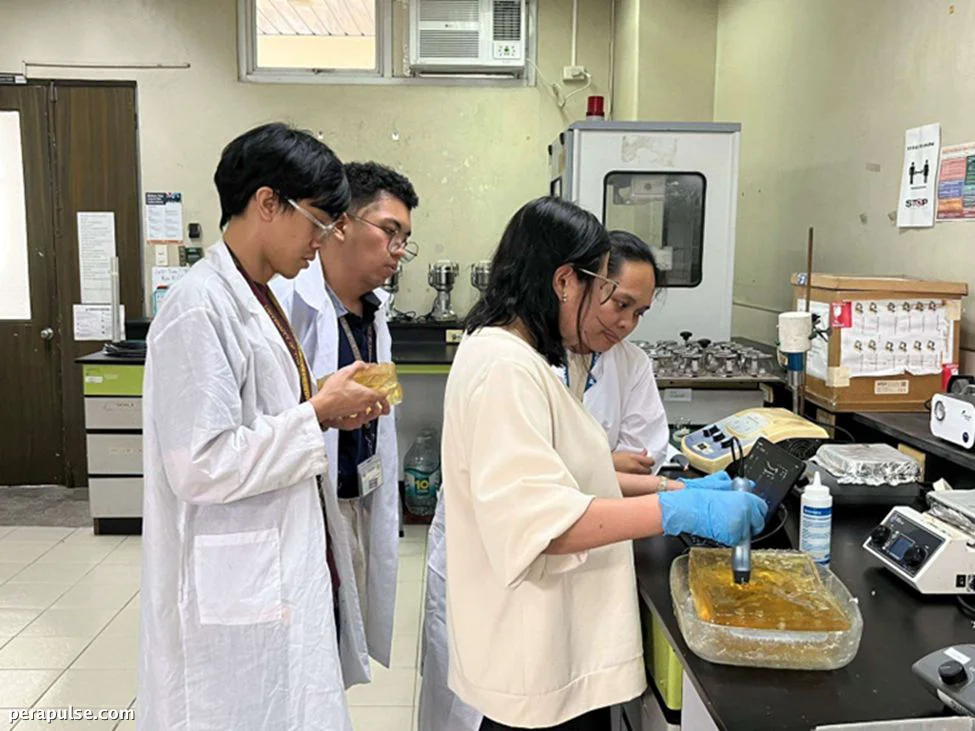
Ang Department of Science and Technology (DOST) ay naglaan ng mahigit P4.99 milyon upang bumuo ng isang phantom model na dinisenyo upang pahusayin ang pagsasanay para sa mga prosedurang ginagabayan ng ultrasound. Ang inisyatibong ito, na pinangunahan ng isang koponan mula sa University of the Philippines Manila, ay naglalayong lumikha ng isang cost-effective na kasangkapan sa pagsasanay para sa mga lokal na propesyonal sa pangangalagang pangkalusugan.
Isang Bagong Paraan sa Pagsasanay sa Medisina
Sa pamamagitan ng paggamit ng mga lokal na kasangkapan upang bigyang kapangyarihan ang ating sariling grupo ng mga propesyonal sa medisina, maaari nating malampasan ang mga kakulangan sa yaman at kasanayan, iakma ang mga proseso sa mga pangangailangan ng ating mga komunidad, at sa huli ay mapabuti ang pangangalaga at resulta para sa mga pasyente.
Renato U. Solidum Jr., Kalihim ng DOST
- Ang phantom model ay nagsasagawa ng simulasyon ng anatomy ng tao para sa makatotohanang pagsasanay.
- Dinisenyo upang maging abot-kaya at maiaangkop sa mga lokal na pangangailangan sa pangangalagang pangkalusugan.
Ang phantom model ay nagsisilbing dummy na nagsasagawa ng mga tugon ng katawan ng tao sa panahon ng mga prosedurang ultrasound. Binibigyang-diin ni Dr. Melissa Amosco, na namumuno sa koponan ng pananaliksik, ang kahalagahan ng paggawa ng mga ganitong mapagkukunan ng pagsasanay na accessible sa buong bansa.
Sa kasalukuyan, ang mga kasangkapan sa pagsasanay sa medisina ay madalas na umaasa sa mga imported na produkto na hindi lamang magastos kundi hindi rin nababagay. Itinuro ni Dr. Leslie Joy Lantisce-Diaz, isang co-investigator, ang pangangailangan para sa mga solusyong lokal na maaaring umangkop sa iba't ibang senaryo ng klinikal.
Plano ng koponan ng pananaliksik na tapusin ang proyekto sa Agosto 2026. Aktibo silang pinapabuti ang modelo batay sa feedback at nag-eexplore ng mga solusyong packaging upang mapadali ang deployment sa iba't ibang rehiyon sa Pilipinas.
Ang kasalukuyang prototype ay naglalaman ng dalawang uri ng materyales na ginagaya ang tissue, na nagsasagawa ng simulasyon ng rehiyon ng abdominopelvic na may mga adjustable na parameter na tumutulong sa pagtukoy ng mga anatomical structures tulad ng mga tumor at cysts. Ang UP-PGH ay na-integrate na ang sistemang ito sa kanilang kurikulum, na matagumpay na nagsanay ng 124 na nagtapos.