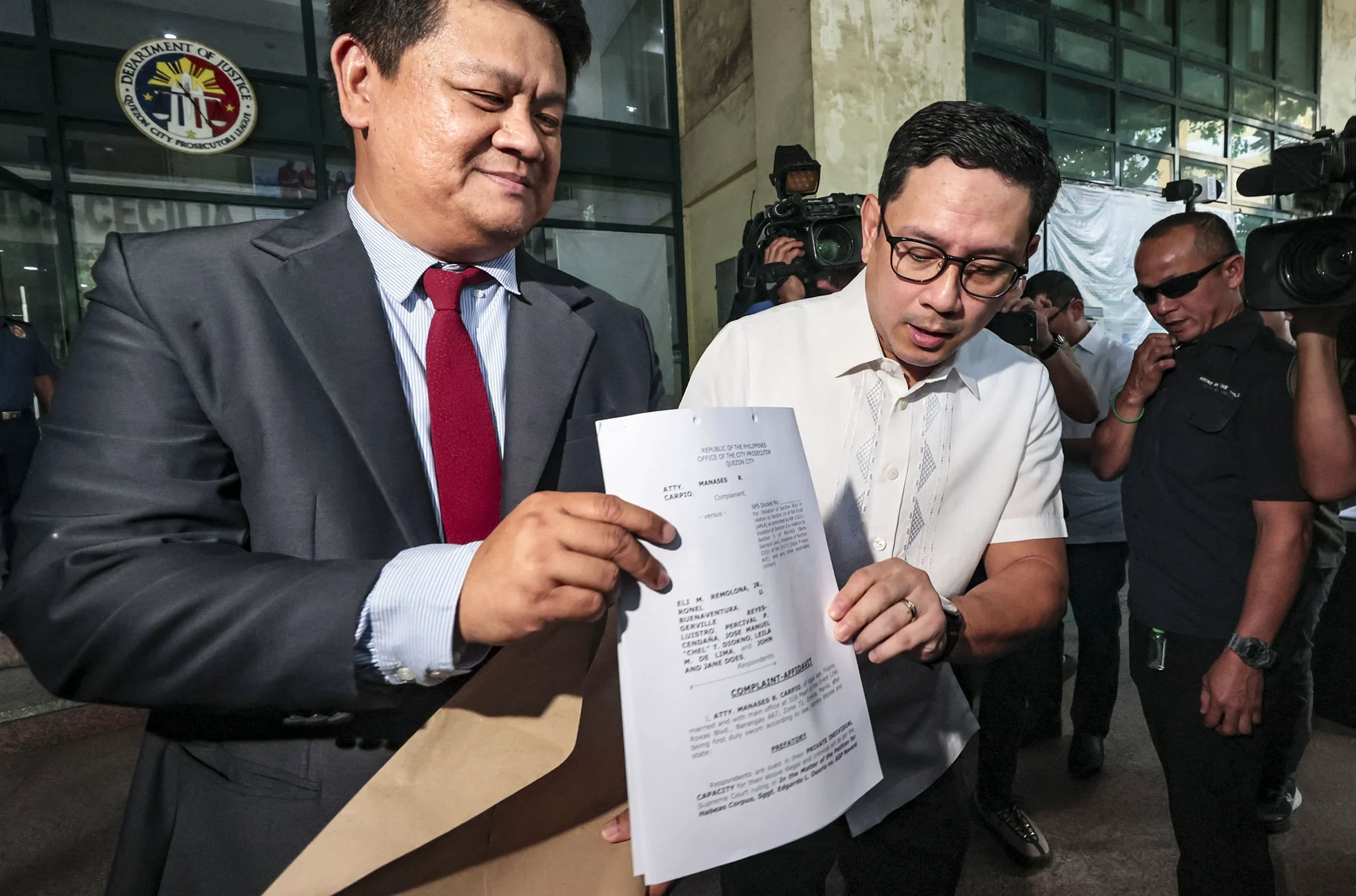
Manases 'Mans' Carpio, the spouse of Vice President Sara Duterte, has issued a warning to media outlets regarding the publication of an Anti-Money Laundering Council (AMLC) report containing his bank records. Carpio’s legal team argues that sharing these details is prohibited by law.
During a press conference, Carpio's lawyer, Peter Paul Danao, referenced an amended provision of Republic Act No. 9160, stating that media personnel could be liable if they publish confidential information from the AMLC.
Danao emphasized caution, stating, 'You have to be careful in citing the AMLC report.' However, he clarified that Carpio does not intend to pursue legal action against journalists.
Carpio recently filed complaints against several government officials for allegedly disclosing his confidential bank information during an impeachment hearing.
Disclosures and Legal Implications
The complaints target Bangko Sentral ng Pilipinas Governor Eli Remolona Jr. and other lawmakers who discussed Carpio's financial transactions, which included claims of suspicious activities.
Danao asserted that the AMLC has no authority to disclose such information without a court order or the depositor's consent.
Contrasting Legal Perspectives
Despite Carpio's warning, other legal experts argue that journalists have constitutional protection when reporting on official proceedings. Michael Henry Yusingco, a research fellow at the Ateneo School of Government, stated that information from legislative hearings is not privileged.
‘Reporting on these matters enjoy full constitutional protection and should not be deterred from reporting the truth,’ Yusingco said.
Michael Henry Yusingco
Edre Olalia, chair of the National Union of Peoples' Lawyers, added that the AMLC itself revealed the information during the hearing, which further complicates claims of confidentiality.
As the situation unfolds, the implications for both Carpio and media outlets remain significant, raising questions about privacy rights and freedom of the press.