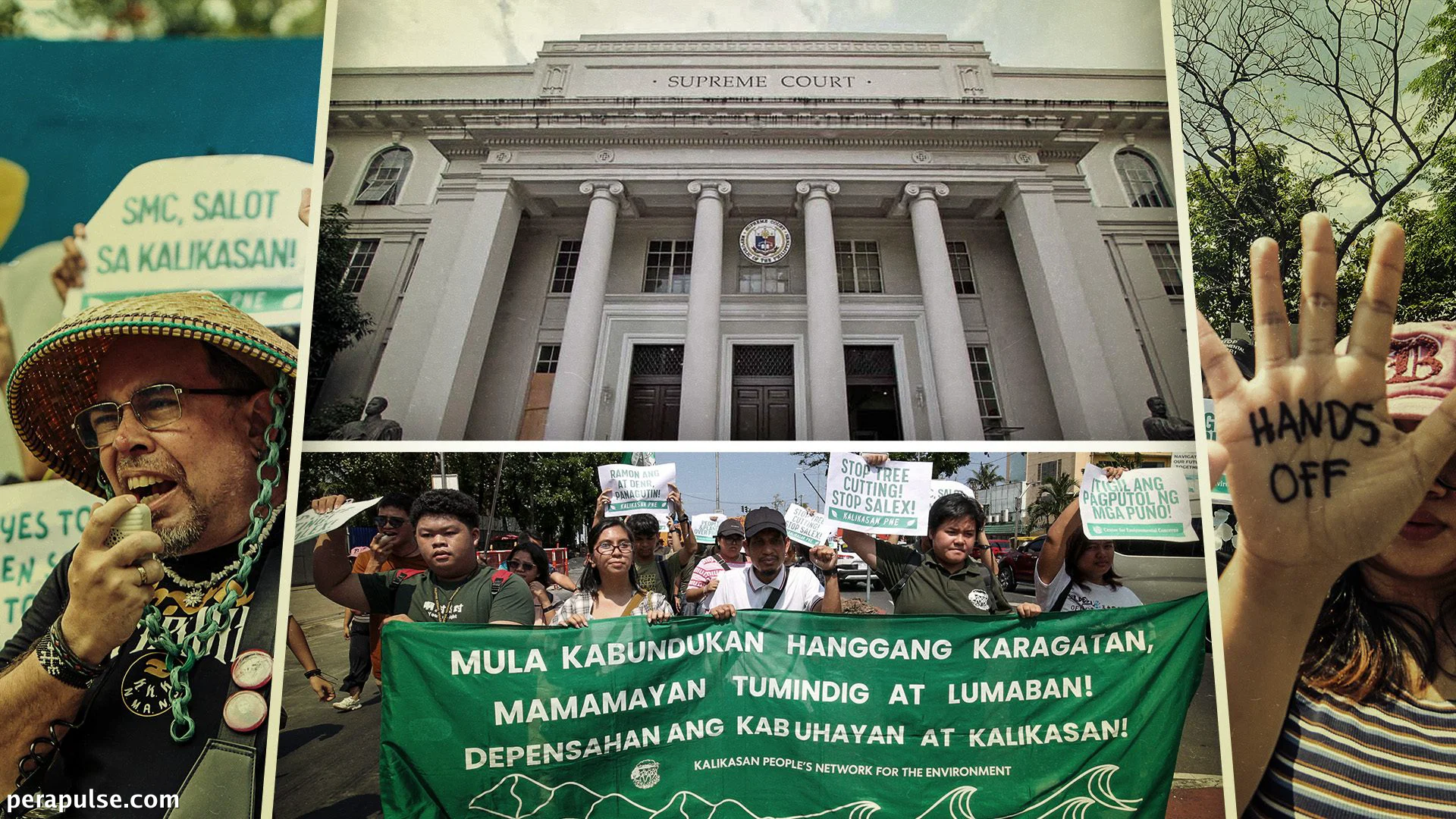
A group of five students has filed a constitutional challenge against the Public-Private Partnership (PPP) Code, alleging it allows San Miguel Corporation to bypass environmental protections for its Southern Access Link Expressway project.
Legal Battle Over Environmental Rights
We were ready to give up, but we thought about not just the remaining trees that they intend to cut down but also the people of Manila who will be affected by this.
Joaquin Lorenzo Bautista, Petitioner
- Students initially sought a temporary environmental protection order to halt tree-cutting.
- Their petition was denied by the Manila Regional Trial Court, leading them to appeal to the Supreme Court.
The petitioners—Joaquin Lorenzo Bautista, Elisha Marielle Zantua, Benjamin Luis Francia, Paul Benedict Carollina, and Hanna Eliza Marie Guerra—argue that the PPP Code's provisions shield projects from judicial review, potentially jeopardizing future environmental health.
Section 23 of the PPP Code restricts lower courts from issuing temporary reliefs, granting only the Supreme Court this authority. The students contend this violates their constitutional right to a balanced and healthful ecology.
They express concerns that these limitations not only threaten current ecological safety but also disregard the principle of intergenerational responsibility, leaving future generations vulnerable to ecological damage.
The petitioners are also raising alarm over provisions that could intimidate lower court judges, thereby undermining judicial independence and potentially allowing corporations like San Miguel to evade accountability.
The PPP Code, established under Republic Act 11966, aims to facilitate public-private partnerships in the Philippines. Critics argue its implementation often favors corporate interests over environmental and public welfare.
The respondents in the case include the presiding judge of the Manila RTC, San Miguel's Southern Access Link Expressway Corporation, and the Department of Environment and Natural Resources.