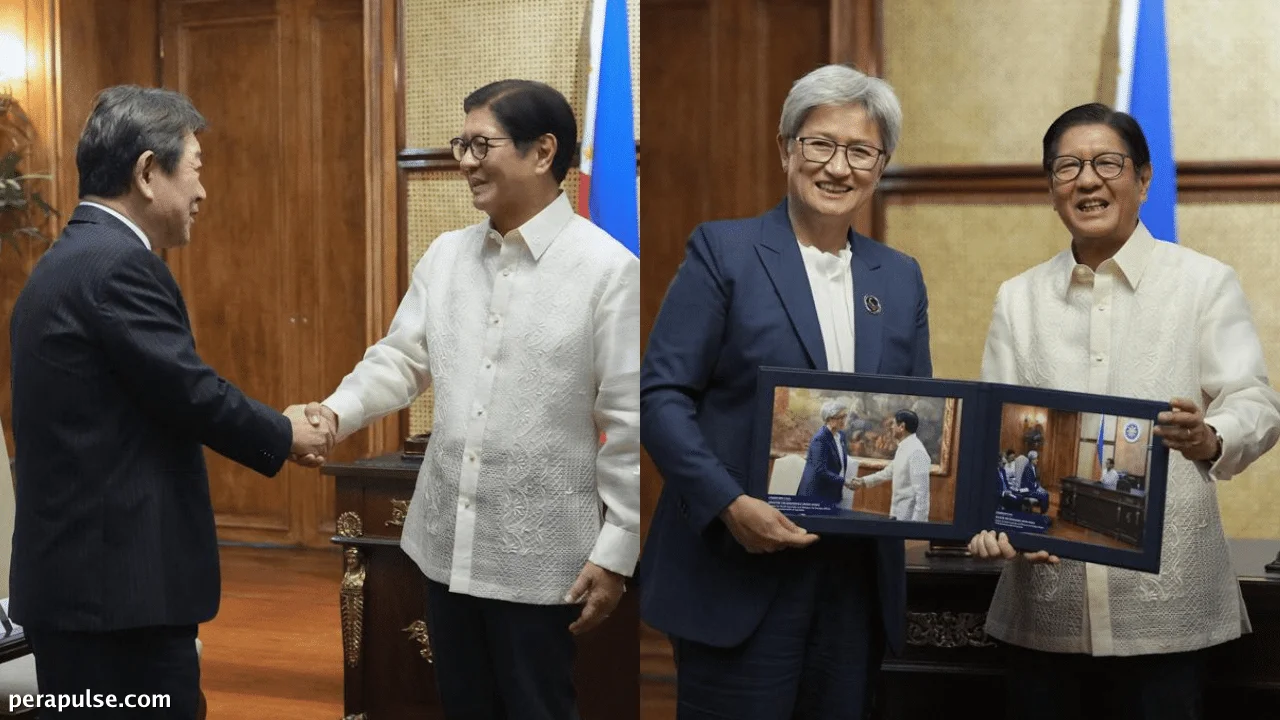
Nagsagawa ng magkahiwalay na pulong si Pangulong Ferdinand Marcos Jr. kasama sina Japanese Foreign Minister Toshimitsu Motegi at Australian Foreign Minister Penny Wong sa Malacañang noong Hulyo 21, 2026, na binigyang-diin ang pangako ng Pilipinas na palakasin ang ugnayan sa parehong mga bansa.
Pagpapalakas ng Ugnayang Biyateral
Ang mga pulong ay naganap kasabay ng ika-59 na ASEAN Foreign Ministers Summit sa Maynila, kung saan ang mga pangunahing paksa ay ang regional security at economic collaboration.
Layunin naming palakasin ang aming ugnayang biyateral sa isang patuloy at multilayered na paraan.
Toshimitsu Motegi, Japanese Foreign Minister
Ipinahayag ni Motegi ang interes ng Japan na palakasin ang kooperasyon sa seguridad sa Pilipinas, partikular sa pamamagitan ng mga trilateral na dayalogo na kinasasangkutan ang Estados Unidos. Binanggit din niya ang pangako ng Japan na palakasin ang kolaborasyong pang-ekonomiya, na nakatuon sa katatagan ng supply chain.
Pangako ng Australia sa Seguridad ng Pilipinas
Ang pagbisita ni Penny Wong ay sinundan ang kanyang anunsyo ng isang makabuluhang pangako mula sa pamahalaan ng Australia, na kinabibilangan ng A$10 milyon (humigit-kumulang P413 milyon) para sa advanced drone technology at pagsasanay para sa Philippine Coast Guard.
- Dobleng pondo para sa mga inisyatibong pandagat na aabot sa P678 milyon sa loob ng apat na taon.
- Paglulunsad ng P1.6 bilyong programa upang suportahan ang mga reporma sa edukasyon sa Pilipinas.
Ang inisyatibong Australian, na pinangalanang Education Quality for Inclusive Prosperity (Equip), ay naglalayong iangkop ang edukasyon sa mga pangangailangan ng industriya at ipatutupad ng Department of Education at ng Technical Education and Skills Development Authority.
Ang muling pagtutok na ito sa pakikipagsosyo sa Australia at Japan ay sumasalamin sa estratehiya ng Pilipinas na palakasin ang mga internasyonal na alyansa sa gitna ng lumalalang tensyon sa rehiyon, partikular sa mga usaping seguridad at katatagan ng ekonomiya.