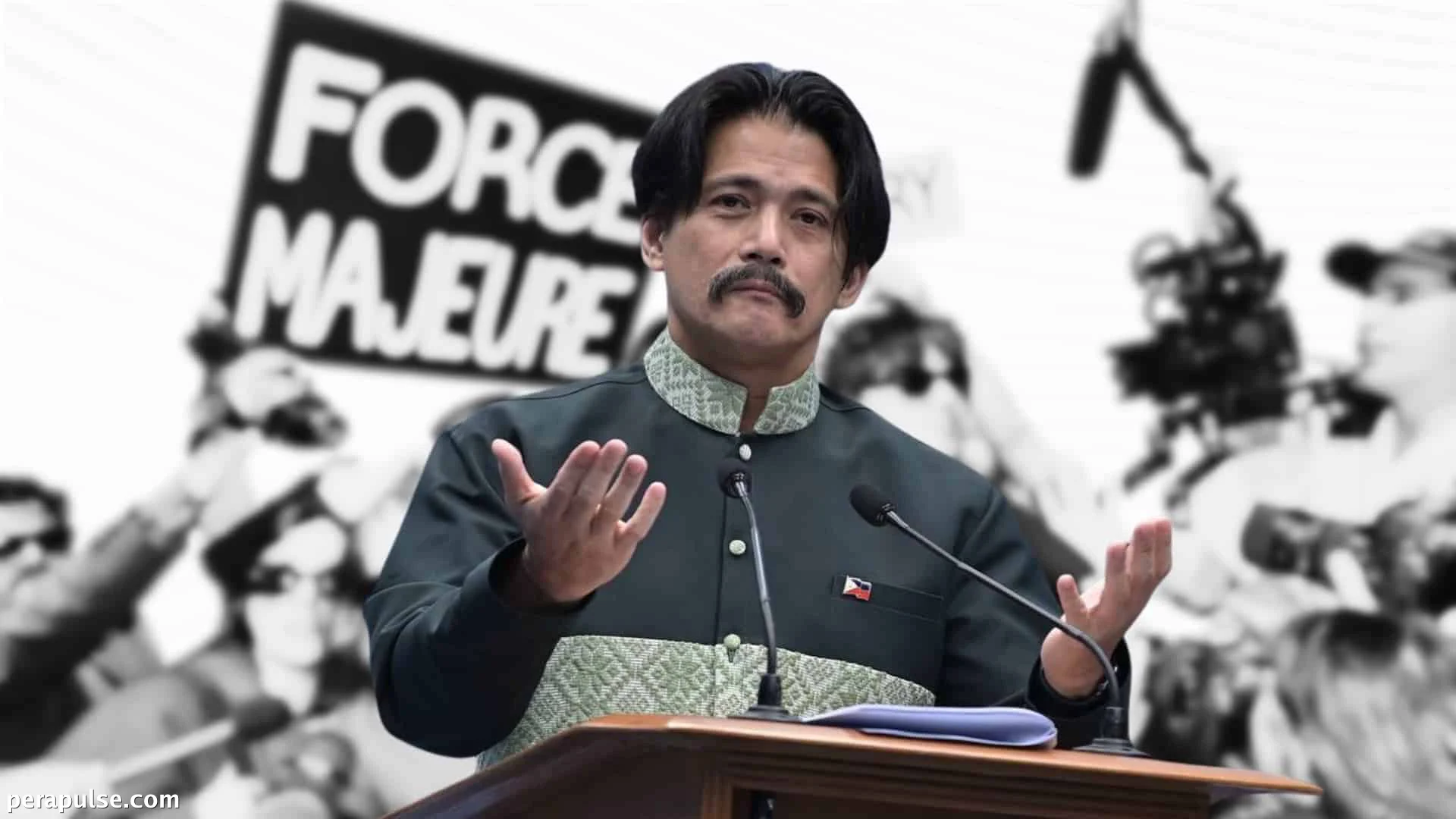
Ang terminong "force majeure" ay kamakailan lamang umusbong sa Pilipinas, lalo na matapos ang mga pahayag ni Senador Robin Padilla na nag-uugnay sa kasalukuyang geopolitical tensions sa legal na konseptong ito.
Ang kanyang mga komento ay bahagi ng isang debate na pumapalibot sa patuloy na talakayan ng Senado tungkol sa pagpapalawak ng kakayahan sa remote voting, isang hakbang na marami ang nakikita bilang kontrobersyal.
Pagpapatukoy sa force majeure sa batas ng Pilipinas
Nagmula sa Pranses, ang "force majeure" ay isinasalin sa "superior force" at tumutukoy sa mga kaganapan na lampas sa kontrol ng tao.
Sa konteksto ng batas ng Pilipinas, ang Artikulo 1174 ng Civil Code ay naglalarawan kung paano naaangkop ang force majeure sa mga kontraktwal na obligasyon, lalo na kapag ang mga hindi inaasahang pangyayari ay nagiging imposible ang pagsasagawa.
Ang sanhi ng paglabag ay dapat na nakapag-iisa sa kalooban ng tao.
(cite: Philippine Civil Code, Article 1174)
- Ang sanhi ay dapat na nakapag-iisa sa kalooban ng tao.
- Ang kaganapan ay dapat na hindi inaasahan o hindi maiiwasan.
- Dapat nitong gawing imposible ang normal na pagtupad.
- Ang obligor ay hindi dapat nakapag-ambag sa pinsala.
Karaniwang mga halimbawa ay ang mga natural na sakuna at digmaan, na maaaring makasagabal nang malaki sa normal na operasyon ng negosyo.
Kamakailang mga implikasyon sa politika
Ang kasalukuyang talakayan ng Senado tungkol sa remote voting ay nagmula sa isang kamakailang pagbabago na nagpapahintulot sa mga ganitong hakbang sa panahon ng mga kaganapan ng force majeure.
Ang probisyong ito ay unang na-activate noong panahon ng pandemya ng COVID-19, na nagpapahintulot sa mga senador na makilahok kahit na sila ay nag-iisa.
Gayunpaman, ang mga kamakailang mungkahi upang palawakin ang mga pamantayan para sa remote participation ay nagdulot ng pag-aalala.
Pinuna ni Senador Risa Hontiveros ang mga pagbabagong ito bilang posibleng nagpapahintulot sa mga mambabatas na umiwas sa pananagutan, partikular sa liwanag ng mga legal na problema ni Senador Ronald "Bato" dela Rosa.
Iginiit ni Hontiveros na ang kasalukuyang pagsisikap ay kulang sa lehitimong dahilan na umiiral noong panahon ng pandemya, na nagha-highlight ng isang makabuluhang pagkakaiba sa mga legal at etikal na implikasyon.