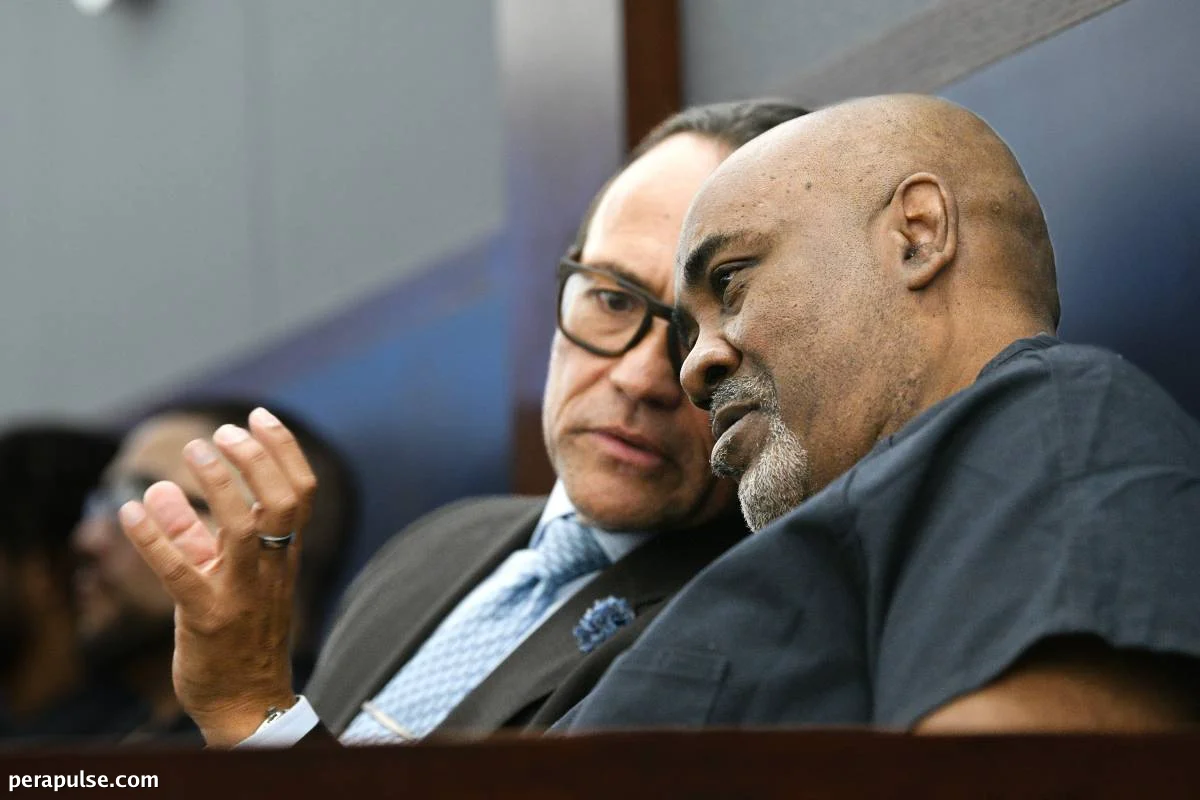
Si Duane 'Keffe D' Davis, 63, ay nakatakdang humarap sa paglilitis sa Las Vegas sa mga kasong nag-ugat mula sa 1996 drive-by shooting na pumatay sa rap legend na si Tupac Shakur. Ang paglilitis na ito ay nagmamarka ng halos tatlong dekada mula nang unang umakit sa publiko ang hindi nalutas na kaso.
Ang Panganib ng Paglilitis
Si Davis ay nahaharap sa isang bilang ng pagpatay gamit ang nakamamatay na armas, na sinasabing bahagi ng isang organisadong pagsisikap ng gang sa pagkamatay ni Shakur. Siya ay nasa kulungan mula noong huli ng 2023 at nananatiling hindi nagkasala.
Sana ay patas ang paglilitis, at malaman natin ang katotohanan,” sabi ni Maurice “Mopreme” Shakur, stepsibling ni Tupac. (cite: Maurice “Mopreme” Shakur, Stepbrother)
- Inaasahang tatagal ang paglilitis ng halos isang buwan.
- Layunin ng mga tagausig na itaguyod si Davis bilang utak sa likod ng pamamaril.
Noong gabi ng Setyembre 7, 1996, si Shakur ay binaril ng maraming beses habang nasa biyahe sa isang BMW. Ang insidente ay nangyari kaagad matapos siyang dumalo sa isang laban sa boksing kasama si Marion “Suge” Knight, na nakaligtas sa pag-atake.
Sa loob ng maraming taon, ang kaso ay nanatiling walang aksyon hanggang sa ang mga pampublikong pag-amin ni Davis ay muling nagpasiklab ng interes. Ang kanyang memoir noong 2019 at mga panayam ay nagbunyag ng kanyang mga koneksyon sa South Side Compton Crips at mga sinasabing motibo na nauugnay sa mga naunang alitan ng gang.
Mga Rivalidad ng Gang at ang Kanilang Papel
Ang pagpatay ay madalas na tinitingnan sa ilalim ng lente ng isang mapait na rivalidad sa pagitan ng Death Row Records at Bad Boy Records, na kinasasangkutan ng mga ugnayan ng gang na nagpalala ng tensyon sa komunidad ng hip-hop.
Ang mga testimonya ay nagmumungkahi na ang pamamaril ay isang paghihiganti para sa isang naunang alitan na kinasangkutan ang pamangkin ni Davis, na nagtatampok sa siklo ng karahasan sa pagitan ng mga rival na pangkat.
Ang depensa ni Davis ay nag-aangkin na ang mga tagausig ay umaasa sa mga kaduda-dudang testimonya mula sa mga hindi naroroon sa panahon ng pamamaril. Sinasabi nila na siya ay umalis sa mga kriminal na aktibidad pagkatapos ng 2009.
Pamana ni Tupac Shakur
Sa kabila ng paglipas ng panahon, ang impluwensya ni Shakur sa musika at kultura ay nananatiling mahalaga. Siya ay nakapagbenta ng higit sa 75 milyong mga rekord, na may mga gawa na malalim na umaabot sa mga tema ng pag-ibig, pakikibaka, at katarungang panlipunan.
Ipinahayag ng mga eksperto na ang epekto ni Shakur sa hip-hop ay walang kapantay, na ginagawang ang resolusyon ng kanyang pagpatay ay hindi lamang isang usapin ng katarungan kundi pati na rin ng makasaysayang kahalagahan.
Habang umuusad ang paglilitis, ang pag-asa para sa mga sagot at potensyal na pagsasara ay kapansin-pansin, ngunit ang pagiging kumplikado ng kaso ay maaaring magdulot ng higit pang mga tanong kaysa sa mga resolusyon.