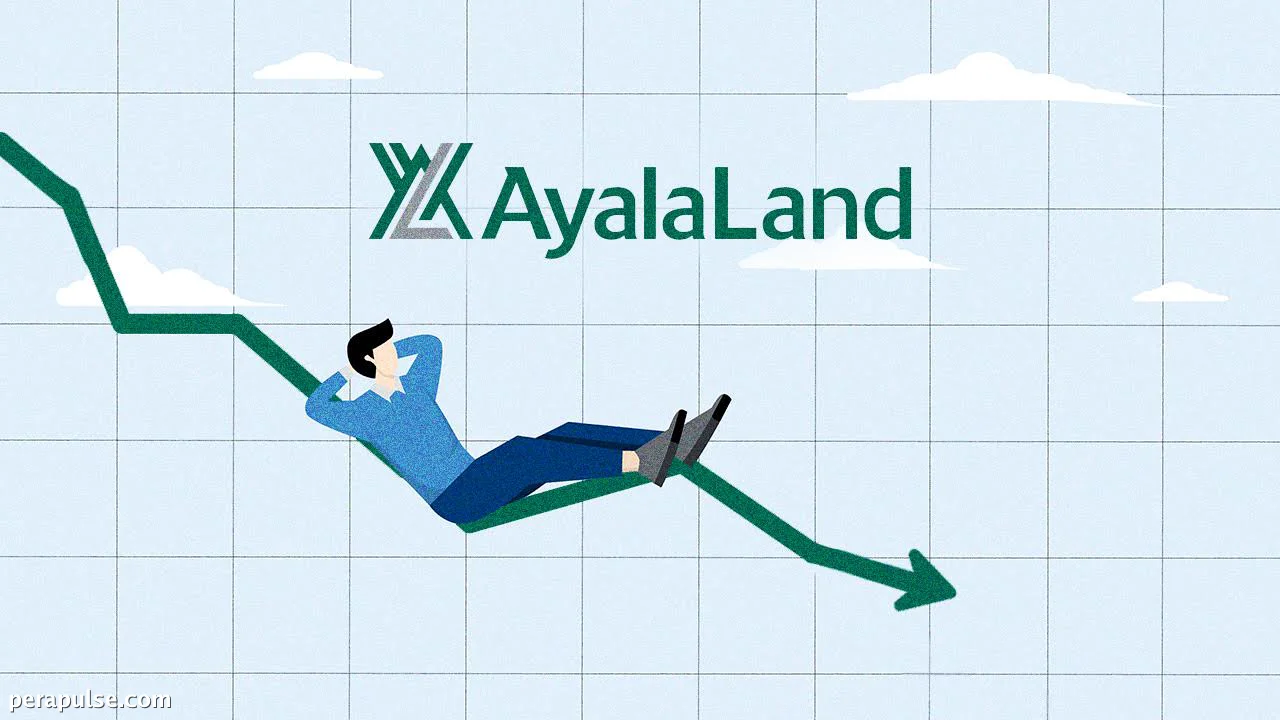
Ayala Land Inc. (ALI) has faced significant challenges in the market, with its stock price plummeting over 40% in the past year. Compounding this decline, the company will be removed from the MSCI Philippines Standard Index at the end of August.
Financial Indicators Show Mixed Signals
The company's first-half revenues decreased by 10% to P75 billion, while net income fell 19% to P11.5 billion. Notably, property-development revenues plunged by 22%.
However, quarterly earnings reflect a slight upward trend, marking a sequential improvement from P5.4 billion in Q1 to P6.1 billion in Q2. This indicates that while the company is not yet in recovery mode, it is no longer experiencing continuous declines.
I see an important distinction between a falling share price and a collapsing business.
Val A. Villanueva, Senior Journalist
The real estate market in the Philippines is under pressure, evident by a 19% drop in Ayala's reservation sales, totaling P53.5 billion. However, this slowdown is not unique to ALI, as national data shows a broader decline in residential construction.
- Total borrowings increased to P337.6 billion as of June, up from P318 billion in 2025.
- The company completed 96% of its refinancing needs for 2026 by the end of June.
Despite the substantial debt, Ayala Land has maintained a reasonable interest coverage ratio of 4.4 times. This suggests that while debt levels are high, the company is capable of meeting its obligations.
Furthermore, ALI's parent company, Ayala Corporation, has continued to purchase shares, indicating confidence in the long-term prospects of Ayala Land.
Recent strategic maneuvers include a P17.33-billion property-for-share swap with AREIT, which could provide future funding opportunities.
In conclusion, while Ayala Land is facing significant challenges, it is also displaying resilience through improved earnings and strategic corporate actions. Investors should monitor reservation sales and cash flow generation closely.