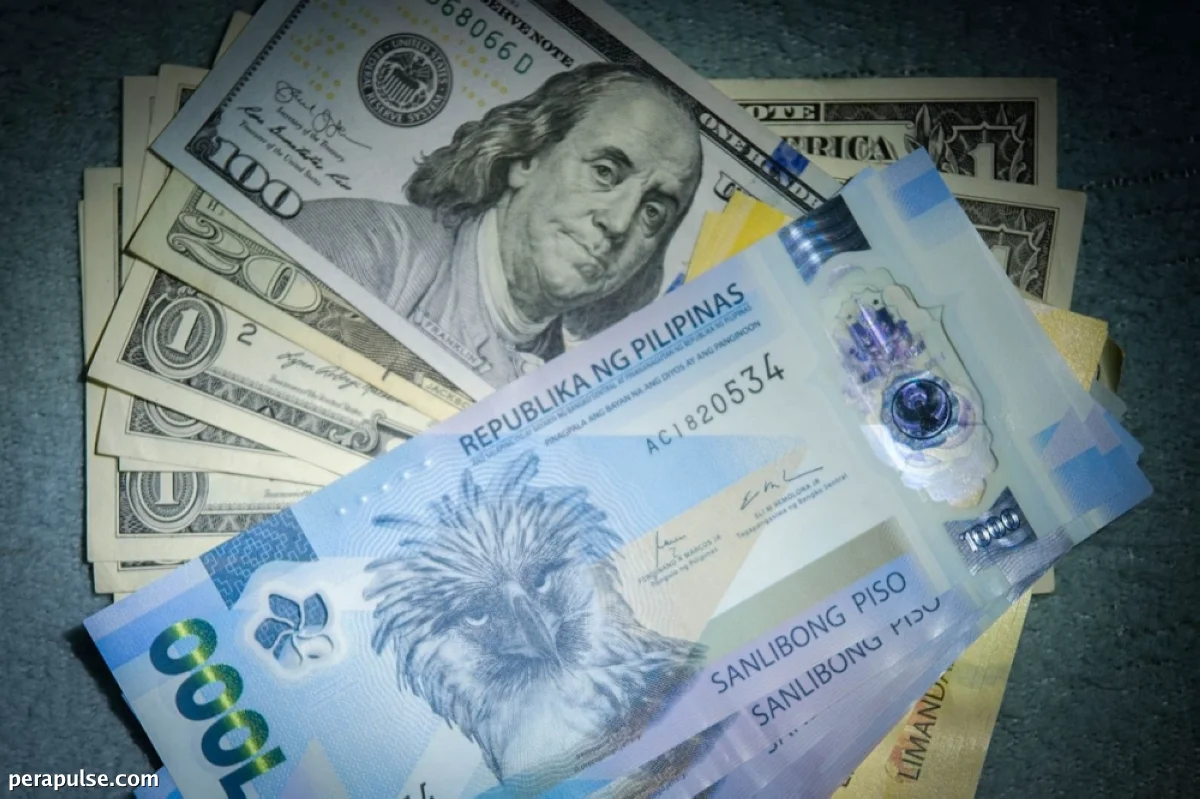
The Philippine peso fell to a new record low of P63.615 against the US dollar on Friday, marking the fourth consecutive day of depreciation. This decline comes amid ongoing concerns about inflation and elevated oil prices, which have weighed heavily on market confidence.
Market Reaction and Economic Outlook
Fundamentally speaking, same backdrop. Weak economic growth, growing budget deficit, then you have a potential snag in government spending given latest SC ruling on budget.
Currency Trader
The peso's drop surpassed Thursday's record low of P63.545, as investors reacted to the Bangko Sentral ng Pilipinas' (BSP) recent interest rate hike of 50 basis points. The Philippine Stock Exchange index (PSEi) followed suit, declining by 51.10 points, or 0.88 percent, to close at 5,728.63.
- Brent crude oil prices are at $113 per barrel, the highest in 52 weeks.
- The peso's depreciation is exacerbated by renewed inflation concerns and a growing budget deficit.
Analysts have noted that the BSP's stance of not targeting a specific exchange rate has encouraged speculation, leading to increased pressure on the peso. This was compounded by worries regarding the domestic economic outlook, particularly in light of the recent Supreme Court ruling affecting government spending.
Japhet Tantiangco, a research manager at Philstocks Financial Inc., emphasized that the combination of the unexpected rate hike, peso depreciation, and soaring oil prices has left the stock market particularly vulnerable.
Trading volume on the local bourse reached P4.53 billion, excluding extraordinary transactions. Despite the overall decline, only the financial sector saw a slight gain of 0.03 percent. Century Pacific Food Inc. emerged as the top gainer, increasing by 1.78 percent, while Manila Electric Co. led losses, dropping by 4.86 percent.
As the peso continues to weaken and inflation expectations rise, investors will be closely monitoring the upcoming U.S. Federal Reserve policy meeting for further implications on global markets.