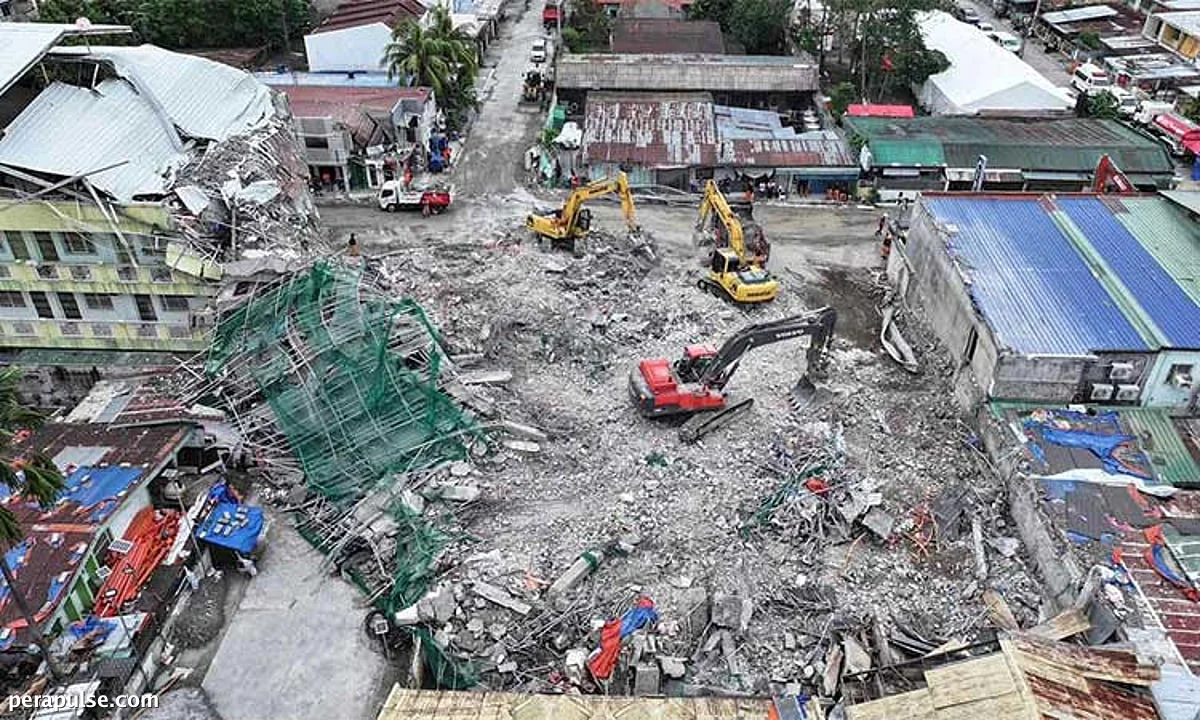
Ang kamakailang pagbagsak ng gusali sa Angeles City, na kumitil ng 30 buhay, ay nagpasimula ng malaking legal na pagsusuri. Binanggit ni Abogado Simoun M. Salinas ang mga legal na implikasyon para sa
Ang kamakailang pagbagsak ng gusali sa Angeles City, na kumitil ng 30 buhay, ay nagpasimula ng malaking legal na pagsusuri. Binanggit ni Abogado Simoun M. Salinas ang mga legal na implikasyon para sa kontratista pagkatapos ng insidente.
Mga Legal na Responsibilidad ng mga Kontratista sa ilalim ng Batas ng Pilipinas
Ang pagtatayo ng isang gusali ay kinasasangkutan ng mga napaka-teknikal na bagay, at kadalasang wala o hindi sapat ang kaalaman o karanasan ng mga may-ari. (cite: Simoun M. Salinas, Abogado)
Ayon kay Salinas, ang Philippine Civil Code ay naglalagay ng pasanin ng pananagutan para sa mga depektibong gusali sa mga kontratista at arkitekto, sa halip na sa mga may-ari ng ari-arian. Ang legal na precedent na ito ay naglalayong tiyakin na ang mga bihasang propesyonal ay mananagot para sa kanilang trabaho.
Ayon kay Salinas, ang Philippine Civil Code ay naglalagay ng pasanin ng pananagutan para sa mga depektibong gusali sa
Ayon kay Salinas, ang Philippine Civil Code ay naglalagay ng pasanin ng pananagutan para sa mga depektibong gusali sa mga kontratista at arkitekto, sa halip na sa mga may-ari ng ari-arian. Ang legal na precedent na ito ay naglalayong tiyakin na ang mga bihasang propesyonal ay mananagot para sa kanilang trabaho.
Binanggit ni Salinas ang isang makabuluhang desisyon ng Korte Suprema, Nakpil vs. Court of Appeals, na nagsasabing hindi maaring ilipat ng mga kontratista ang kanilang pananagutan sa mga may-ari ng gusali. Ang desisyong ito ay nagpapatibay na ang teknikal na kalikasan ng konstruksyon ay karaniwang lumalampas sa kaalaman ng karaniwang may-ari.
Binanggit ni Salinas ang isang makabuluhang desisyon ng Korte Suprema,
Binanggit ni Salinas ang isang makabuluhang desisyon ng Korte Suprema, Nakpil vs. Court of Appeals, na nagsasabing hindi maaring ilipat ng mga kontratista ang kanilang pananagutan sa mga may-ari ng gusali. Ang desisyong ito ay nagpapatibay na ang teknikal na kalikasan ng konstruksyon ay karaniwang lumalampas sa kaalaman ng karaniwang may-ari.
Binigyang-diin niya na ang pagsunod sa iba't ibang regulasyon sa pagtatayo, kabilang ang pagkuha ng Building Permit at Certificate of Occupancy, ay nagpoprotekta sa mga may-ari mula sa pananagutan kung sila ay kumilos nang may pagsisikap sa pagpili ng mga kwalipikadong kontratista.
Binigyang-diin niya na ang pagsunod sa iba't ibang regulasyon sa pagtatayo, kabilang ang pagkuha ng
Binigyang-diin niya na ang pagsunod sa iba't ibang regulasyon sa pagtatayo, kabilang ang pagkuha ng Building Permit at Certificate of Occupancy, ay nagpoprotekta sa mga may-ari mula sa pananagutan kung sila ay kumilos nang may pagsisikap sa pagpili ng mga kwalipikadong kontratista.
Ang balangkas na ito ay mahalaga para sa pagpapanatili ng kaligtasan sa industriya ng konstruksyon, lalo na sa liwanag ng mga insidente na nagreresulta sa pagkawala ng buhay. Habang nagpapatuloy ang mga imbestigasyon sa kamakailang pagbagsak, ang pagbibigay-diin sa pananagutan ng mga kontratista ay maaaring humantong sa mas mahigpit na pagpapatupad ng mga regulasyon sa pagtatayo.
Ang balangkas na ito ay mahalaga para sa pagpapanatili ng kaligtasan sa industriya ng konstruksyon, lalo na sa liwanag ng mga insidente na nagreresulta sa pagkawala ng buhay. Habang nagpapatuloy ang mga imbestigasyon sa kamakailang pagbagsak, ang pagbibigay-diin sa
Ang balangkas na ito ay mahalaga para sa pagpapanatili ng kaligtasan sa industriya ng konstruksyon, lalo na sa liwanag ng mga insidente na nagreresulta sa pagkawala ng buhay. Habang nagpapatuloy ang mga imbestigasyon sa kamakailang pagbagsak, ang pagbibigay-diin sa pananagutan ng mga kontratista ay maaaring humantong sa mas mahigpit na pagpapatupad ng mga regulasyon sa pagtatayo.