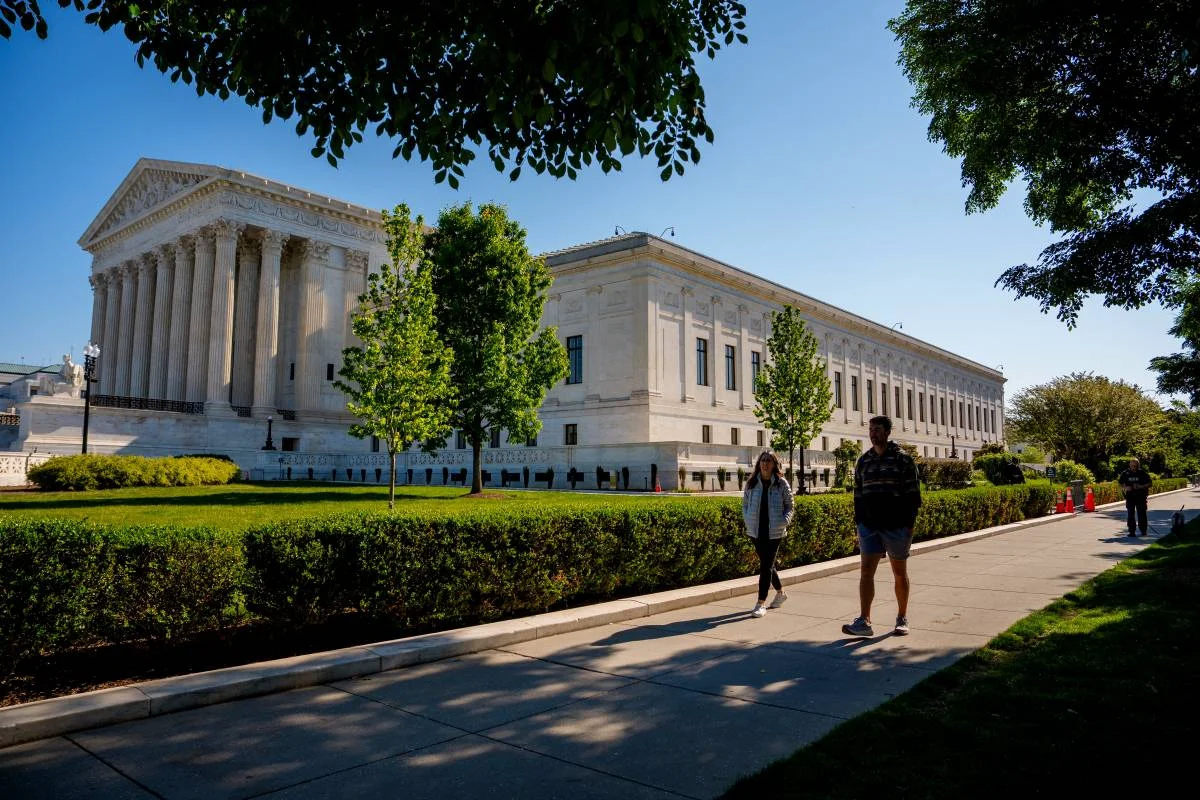
The US Supreme Court has halted an order for Alabama to implement a congressional map that includes two majority-Black districts. This ruling, issued on Monday, could enable Republicans to secure an additional seat in the upcoming midterm elections.
This decision follows a recent ruling that invalidated a majority-Black congressional district in Louisiana for being an unconstitutional racial gerrymander. Alabama officials cited this ruling as a basis to overturn a court-imposed map that was to remain in effect until after the 2030 census.
The Supreme Court's ruling directs a lower court to reassess the Alabama case, potentially allowing the state to revert to a map approved in 2023. This map features only one district where Black residents hold a majority.
In anticipation of this ruling, Alabama lawmakers passed legislation that would enable a new primary election on May 19 for certain congressional districts, should the state implement new district boundaries.
Alabama Republicans hailed the Supreme Court's decision. Attorney General Steve Marshall stated it restores the power to draw maps to the legislature, which he aims to configure to favor Republicans.
Justice Sonia Sotomayor, in dissent, argued that while the Louisiana ruling addressed specific issues, it did not eliminate the possibility of finding that Alabama discriminated against Black voters.
The ruling represents a setback for Black advocacy groups that have fought for fair representation. NAACP National President Derrick Johnson expressed concerns over what he termed a regression to Jim Crow-era practices.
Plaintiff Shalela Dowdy shared her disappointment, warning that Alabama could move to eliminate the remaining predominantly Black district.
The impending May 19 primaries now present a complicated scenario for voters. Alabama Secretary of State Wes Allen confirmed that the primaries will proceed as planned while monitoring ongoing developments.
The ruling could enable Republicans to reclaim a district currently held by Democrat Shomari Figures, who was elected in 2024 under the court-mandated map.
As Alabama navigates these changes, it joins a broader national trend of redistricting efforts aimed at shifting congressional power. Republicans are seeking to capitalize on these opportunities before the November elections.