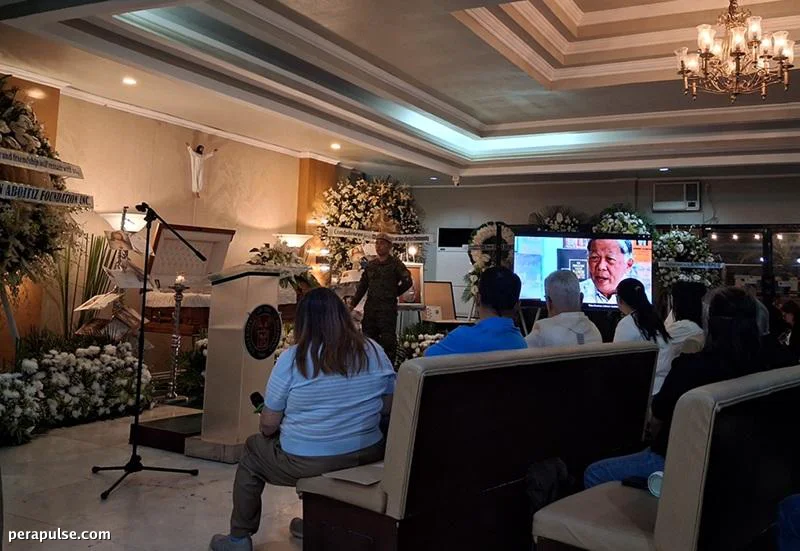
Resil Mojares, revered as Cebu's sole National Artist for Literature, was laid to rest on September 12 at Cebu Memorial Park. His passing prompted a Day of National Mourning, declared by Malacañang, to honor his extensive contributions to Philippine culture.
A Multifaceted Legacy
Mojares believed that true national history is not just the story of Manila, but must also be informed and enriched by telling the story of life and its vicissitudes anywhere else in the archipelago.
Jose Eleazar Bersales, Director of USC Museum
A tribute ceremony held by the University of the Philippines Cebu and University of San Carlos showcased Mojares' diverse career as an educator, journalist, historian, and artist. His impact on Cebu's cultural heritage is immeasurable.
- Established the Cebuano Studies Center, promoting regional literature and history.
- Authored over 120 works, including acclaimed titles like 'Origins and Rise of the Filipino Novel.'
- Mentored generations of writers and historians, shaping Cebuano identity.
Hope Sabanpan-Yu, current director of the Cebuano Studies Center, emphasized that Mojares' work created a lasting home for Cebuano and Visayan culture. His writings highlighted Cebu's significance in the national narrative, challenging the notion of Manila as the center of Philippine identity.
Mojares was also a journalist who reported on crucial political developments in the late 1960s and early 1970s, including student protests leading to Martial Law. His critical columns often put him at odds with powerful figures, resulting in his arrest shortly after the declaration of Martial Law.
His dedication to independent journalism was evident in his involvement with The Independent Post, a cooperative newspaper that aimed to empower community voices through news. Despite financial challenges, Mojares supported the initiative, showcasing his commitment to a free press.
Mojares' scholarly works include critical analyses of Cebu's history, emphasizing local narratives that enrich the broader understanding of the Philippines. His writings contributed to significant historical projects, including the comprehensive documentation of Cebu's towns and cities.
As an artist, he directed theatrical productions, showcasing his versatility and passion for the arts. Friends and colleagues remember him as a guiding force who inspired creativity and critical thinking in those around him.
Mojares' family described him as a nurturing father who provided the space for his children to explore their own paths. His legacy extends beyond literature into the hearts and minds of future generations.
The outpouring of tributes following his death illustrates the profound impact he had on Cebu and the Philippines as a whole. Mojares' work reminds us that regional stories are vital to understanding our national identity.