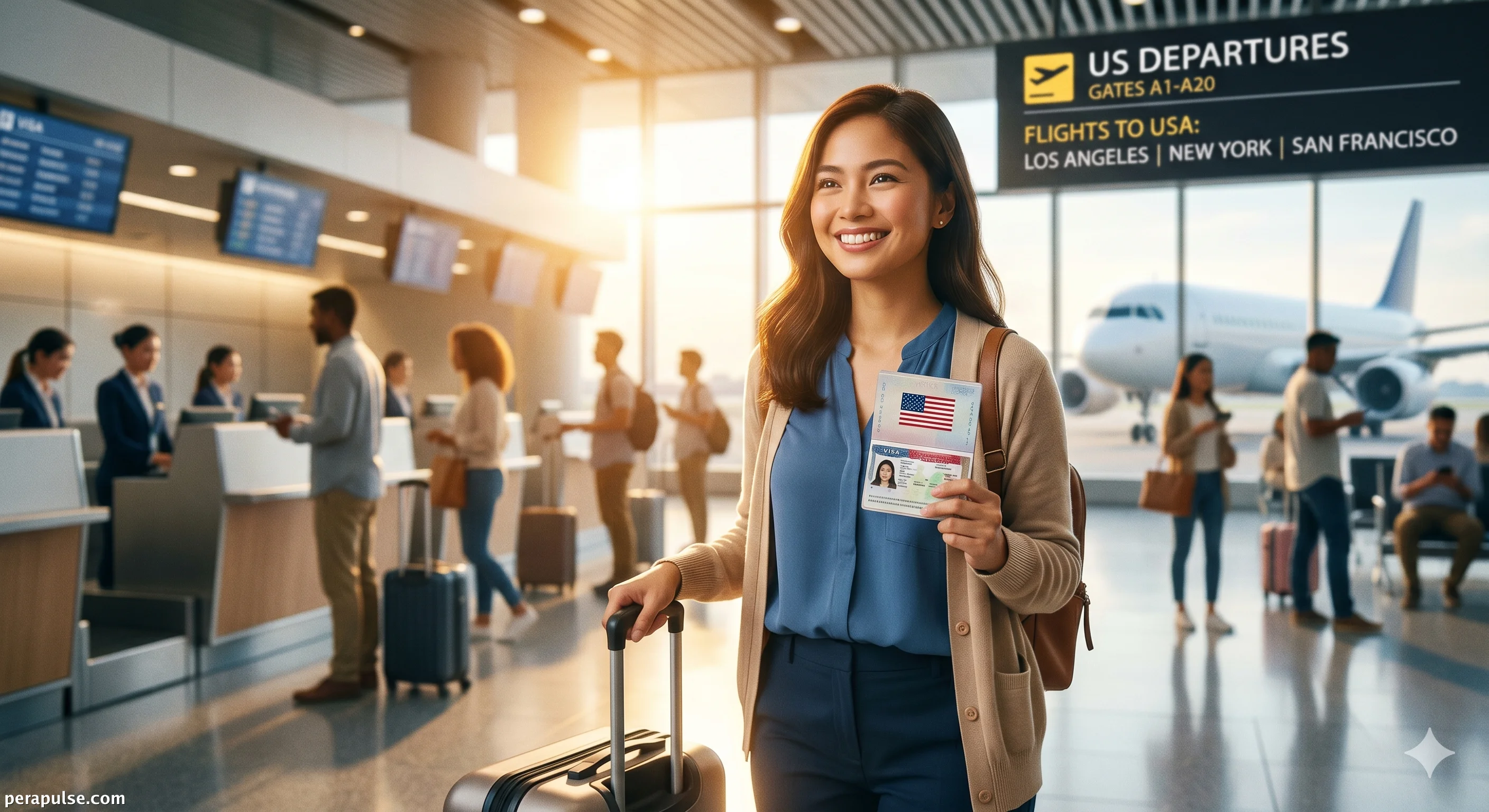
Ang pag-aaplay para sa US visa ay kadalasang parang paghahanda para sa isang malaking pagsusulit. Nariyan ang mga papeles, ang mga bayarin, ang pag-schedule, at, syempre, ang nerbiyos na inaasahan bago ang interbyu sa embahada. Kung ikaw ay isang mamamayang Pilipino na nangangarap na maglakad sa mga kalye ng New York, bumisita sa pamilya sa California, o dumalo sa isang mahalagang kumperensya sa negosyo sa Chicago, ang pag-secure ng visa na iyon ang iyong mahalagang unang hakbang.
Ang kalakaran ng proseso ng aplikasyon ng US visa para sa mga Pilipino ay nakakita ng ilang mahahalagang pagbabago noong 2026. Ang pagkakasunod-sunod ng mga hakbang ay mas mahigpit, at ang pag-unawa sa mga detalye ay maaaring maging pagkakaiba sa pagitan ng isang may selyong pasaporte at isang kinatatakutang 214(b) denial slip.
Ang gabay na ito ay nagbabasag ng lahat ng kailangan mong malaman tungkol sa pag-secure ng US visa bilang isang Pilipinong aplikante ngayon. Tinatanggal namin ang nakakalitong jargon at binibigyan ka ng praktikal, makatawid na paraan upang makakuha ng pag-apruba.
Pag-unawa sa mga Uri ng US Visas
Bago ka pa man tumingin sa isang application form, kailangan mong malaman kung ano ang inaaplayan mo. Ang gobyerno ng US ay nag-iisyu ng dose-dosenang uri ng visa, ngunit karaniwang nahahati ang mga ito sa dalawang pangunahing kategorya:
- Nonimmigrant Visas: Para sa pansamantalang paglalakbay (turismo, negosyo, pag-aaral, panandaliang trabaho).
- Immigrant Visas: Para sa mga nagnanais na manirahan at magtrabaho ng permanente sa Estados Unidos.
Para sa napakaraming Pilipino, ang layunin ay ang B1/B2 Visitor Visa.
- B1 (Negosyo): Para sa pagkonsulta sa mga kasosyo sa negosyo, pagdalo sa mga siyentipiko, pang-edukasyon, o propesyonal na kombensyon, o pag-negosasyon ng kontrata.
- B2 (Turismo): Para sa turismo, bakasyon, pagbisita sa mga kaibigan o kamag-anak, medikal na paggamot, at pakikilahok sa mga sosyal na kaganapan.
Karaniwan, ang US Embassy sa Maynila ay nag-iisyu ng mga ito bilang pinagsamang B1/B2 visa, kadalasang may bisa ng 10 taon na may maraming pagpasok.
Ang 2026 Process Update: Ano ang Nagbago?
Kung narinig mo ang mga kwento mula sa mga kaibigan na nag-aplay ilang taon na ang nakalipas, kailangan mong i-update ang iyong mga tala. Mula noong 2026, ang pagkakasunod-sunod ng aplikasyon ay mahigpit na ipinatutupad. Kailangan mong kumpletuhin at isumite ang iyong DS-160 form bago ka makagawa ng profile sa CGI scheduling portal.
Ang pagsubok na lumampas dito o paggamit ng hindi kumpletong DS-160 upang makakuha ng appointment date ay magreresulta sa pagkansela ng iyong appointment o matinding pagkaantala sa iyong biometrics collection.
Ang gintong tuntunin para sa mga aplikasyon noong 2026: Ang iyong DS-160 ang iyong pundasyon. Kumpletuhin ito nang tapat, isumite ito nang buo, at ingatan ang numerong kumpirmasyon na iyon. Ang lahat ng iba pa ay nakabatay dito.
Hakbang-hakbang na Proseso ng Aplikasyon ng US Visa
Sundin ang mga hakbang na ito nang eksakto sa pagkakasunod-sunod. Ang isang maling hakbang dito ay maaaring magdulot sa iyo ng oras at isang hindi maibabalik na bayad sa aplikasyon.
- Kumpletuhin ang DS-160 Form
Nangangailangan ng ~90 minuto at isang kamakailang digital na larawan
(insight mula kay Kristina Mendoza)
Ang DS-160 (Online Nonimmigrant Visa Application) ay isang komprehensibong background questionnaire. Kailangan mong punan ito sa website ng Consular Electronic Application Center (CEAC). Kailangan mong i-upload ang isang kamakailang 2x2 inch digital photograph na sumusunod sa mahigpit na mga pagtutukoy ng gobyerno ng US (walang salamin, puting background, kamakailan sa loob ng 6 na buwan). Kapag naisumite na, i-print ang confirmation page na may barcode.
- Gumawa ng Iyong Online Profile
Gamitin ang US Travel Docs o CGI portal
Pumunta sa opisyal na US visa scheduling portal para sa Pilipinas. Gumawa ng account gamit ang isang wastong email address. Hihilingin sa iyo na ipasok ang iyong personal na detalye, impormasyon ng pasaporte, at ang kritikal na DS-160 confirmation number na iyong nabuo sa Hakbang 1.
- Bayaran ang MRV Application Fee
Kasalukuyang bayad para sa B1/B2 ay $185
Ang Machine Readable Visa (MRV) fee ay hindi maibabalik. Para sa isang karaniwang B1/B2 tourist visa, ang bayad ay $185. Maaari mo itong bayaran sa pamamagitan ng cash sa anumang Rizal Commercial Banking Corporation (RCBC) branch, sa pamamagitan ng online payment portal ng RCBC (kung mayroon kang account), o sa pamamagitan ng PesoNet. Itago ang iyong resibo; ang numero ng resibo ay nag-activate ng iyong kakayahang mag-schedule ng appointment.
- I-schedule ang Iyong Dalawang Appointment
Hindi ka lang nag-schedule ng isang interbyu. Kailangan mong mag-book ng dalawang magkahiwalay na appointment:
- Visa Application Center (VAC): Para sa iyong biometrics (fingerprints at larawan). Ito ay dapat mangyari bago ang iyong interbyu sa embahada.
- US Embassy Consular Interview: Ang aktwal na face-to-face na interbyu kasama ang isang consular officer.
- Dumalo sa VAC Biometrics Appointment
Matatagpuan sa Parañaque City
Dumating sa offsite VAC (Parqal Building 8, Level 3, Diosdado Macapagal Blvd) sa iyong nakatakdang petsa. Dalhin ang iyong pasaporte, DS-160 confirmation page, at VAC appointment letter. Kukunin nila ang iyong fingerprints at isang digital na larawan.
- Dumalo sa Embassy Interview
Matatagpuan sa Roxas Boulevard, Manila
Dumating sa US Embassy Manila hindi hihigit sa 15 minuto bago ang iyong nakatakdang oras. Dalhin ang iyong kasalukuyan at lumang mga pasaporte, DS-160 confirmation, appointment letter, at mga supporting documents.
Pag-unawa sa DS-160 Form
Ang DS-160 ay higit pa sa isang form; ito ang iyong unang interbyu. Ang consular officer ay titingnan ang iyong DS-160 bago ka pa man umakyat sa bintana.
Mga Pro-Tips para sa DS-160:
- Madalas na I-save: Ang sistema ay nag-time out pagkatapos ng 20 minuto ng kawalang-galaw. I-save agad ang iyong application ID at sagot sa security question upang ma-retrieve ito mamaya.
- Maging Tiyak: Kung tinanong tungkol sa iyong trabaho, huwag lang ilagay ang "Employee." Isulat ang "Senior Financial Analyst" o "Store Manager."
- Magsabi ng Katotohanan: Ang mga hindi pagkakatugma sa pagitan ng iyong DS-160 at iyong mga sagot sa interbyu ang pangunahing sanhi ng visa denials. Kung mayroon kang mga kamag-anak sa US, idineklara sila.
Ang Appointment sa Visa Application Center (VAC)
Ang pagpapakilala ng offsite VAC ay dinisenyo upang bawasan ang congestion sa pangunahing compound ng embahada. Ito ay isang tuwirang, administratibong pagbisita. Walang mga interbyu na nagaganap dito.
Ano ang dapat asahan: Ikaw ay maghihintay sa pila, ipapakita ang iyong mga dokumento, at kukunan ng digital na fingerprint. Kukunin din nila ang isang sariwang larawan mo. Magbihis ng maayos, ngunit hindi mo kailangang magsuot ng suit para sa hakbang na ito. Tiyakin na ang iyong mga kamay ay malinis at walang sugat o paltos, dahil maaari itong makagambala sa fingerprint scanner.
Pagsasagawa ng Consular Interview sa US Embassy Manila
Ito ang sandali na kinatatakutan ng karamihan sa mga aplikante, ngunit kadalasang natatapos ito sa loob ng wala pang tatlong minuto.
Ang batas ng imigrasyon ng US ay nagpapatakbo sa ilalim ng isang mahigpit na presumption (Seksyon 214(b) ng Immigration and Nationality Act): Ang bawat aplikante ay itinuturing na isang nagnanais na imigrante hanggang sa patunayan ang kabaligtaran.
Ang buong layunin mo sa panahon ng interbyu ay upang patunayan ang iyong "malalakas na ugnayan" sa Pilipinas. Kailangan mong kumbinsihin ang opisyal na mayroon kang mga nakaka-engganyong dahilan upang bumalik sa bahay pagkatapos ng maikling pagbisita.
Paano Patunayan ang Malalakas na Ugnayan
- Mga Ekonomikong Ugnayan: Isang matatag, mataas na bayad na trabaho, pagmamay-ari ng negosyo, o mga pamumuhunan sa ari-arian.
- Mga Pamilyang Ugnayan: Isang asawa, mga anak, o mga dependent na magulang na nananatili sa Pilipinas.
- Kasaysayan ng Paglalakbay: Isang pasaporte na puno ng mga selyo mula sa ibang mga bansa (lalo na ang mga first-world nations tulad ng Japan, South Korea, Australia, o mga bansang Schengen) ay nagpapakita na ikaw ay isang lehitimong turista na nirerespeto ang mga batas ng imigrasyon.
Ang Dynamics ng Interbyu
Kapag lumapit ka sa bintana, ngumiti at batiin ang opisyal. Magsalita nang malinaw sa mikropono. Sagutin lamang ang mga tanong na itinataas.
Mga Karaniwang Tanong:
- Bakit ka pupunta sa US? (Maging tiyak. "Pupunta ako sa isang tech conference sa Las Vegas sa loob ng 4 na araw," ay mas mabuti kaysa sa "Basta bakasyon.")
- Ano ang ginagawa mo para sa kabuhayan sa Pilipinas?
- Sino ang nagbabayad para sa iyong biyahe?
- Mayroon ka bang mga kamag-anak sa US?
Huwag ipasok ang mga dokumento sa opisyal. Bihirang humihingi ng mga bank certificates o land titles maliban na lang kung kailangan nila ng paglilinaw. Ang iyong DS-160 at ang iyong mga verbal na sagot ang may pinakamalaking timbang. Panatilihing maayos ang iyong mga supporting documents sa isang folder, at ibigay lamang ang mga ito kung partikular na hiniling.
Mga Karaniwang Dahilan ng Visa Denial (Seksyon 214(b))
Kung ibinabalik sa iyo ng opisyal ang iyong pasaporte na may puting piraso ng papel, ang iyong visa ay tinanggihan sa ilalim ng Seksyon 214(b). Ito ay hindi isang permanenteng pagbabawal; ito ay simpleng nangangahulugan na hindi mo napatunayan ang sapat na malalakas na ugnayan sa Pilipinas sa oras na ito.
Mga karaniwang trigger para sa denial ay kinabibilangan ng:
- Malabo o hindi pare-parehong mga sagot.
- Hindi sapat na kita upang suportahan ang mga nakasaad na plano sa paglalakbay.
- Isang kamakailang pagtatapos na walang naitatag na kasaysayan ng trabaho.
- Isang solong, batang propesyonal na demographic na may mga kapatid na naninirahan na ng ilegal sa US.
Kung tinanggihan, huwag makipagtalo sa opisyal. Tanggapin ang liham nang may paggalang. Maaari kang muling mag-aplay anumang oras, ngunit lubos na inirerekomenda na maghintay hanggang ang iyong mga kalagayan ay makabuluhang nagbago (hal. pagkuha ng promosyon, pagpapakasal, o malawak na paglalakbay sa ibang mga bansa).
Konklusyon
Ang pag-secure ng US visa sa Pilipinas ay isang pagsasanay sa paghahanda, katapatan, at pagpapakita ng katatagan. Sa pamamagitan ng maingat na pagpuno ng iyong DS-160, pag-unawa sa mga procedural updates ng 2026, at pagpasok sa US Embassy Manila nang may kumpiyansa at malinaw na layunin, lubos mong pinapataas ang iyong mga pagkakataon ng tagumpay. Mag-ingat sa paglalakbay, at tamasahin ang biyahe!