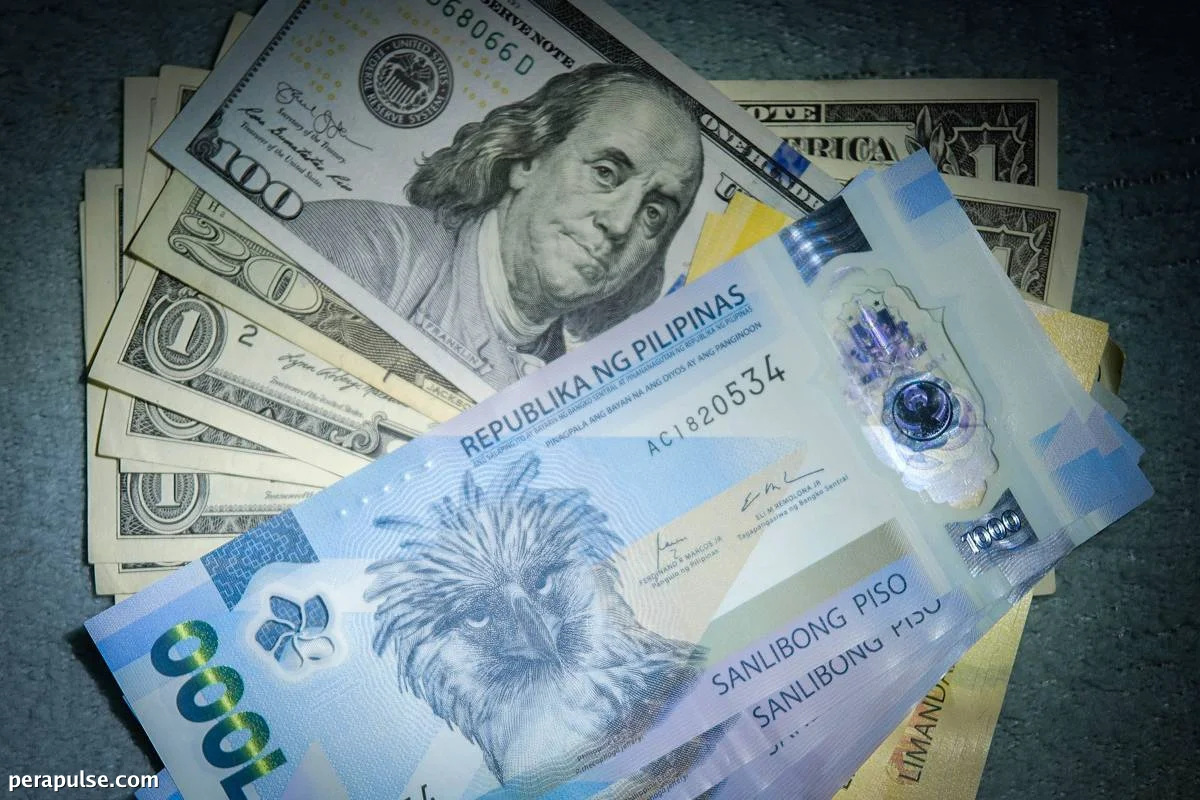
The Philippine peso continued its upward trend this week, recording a 1.1% gain against the US dollar, but the stock market faced a setback as investors locked in profits.
Peso's Weekly Performance
On Friday, the peso closed at P63.055 to the dollar, down 8.5 centavos from the previous day's P62.97. This marks a recovery of 68.5 centavos for the week, reversing last week's slight depreciation.
The peso's continued improvement is largely due to lower global crude oil prices, easing pressure on the local currency.
Michael Ricafort, Chief Economist, Rizal Commercial Banking Corp.
- Seasonal dollar conversions by OFWs and BPOs ahead of the holiday season.
- Improved market sentiment amid easing external pressures.
Economist John Paolo Rivera noted that while the peso's gains reflect a positive market sentiment, it is essential not to consider them a permanent reversal. The currency's future will depend on international dollar movements, oil prices, and monetary policy.
A stronger peso may help alleviate imported inflation, particularly in fuel and production costs, but the effects on consumers will not be immediate.
Stock Market Retreats Amid Caution
In contrast, the Philippine Stock Exchange index (PSEi) fell by 16.19 points, or 0.28%, closing at 5,761.95. This decline ended the index's two-day winning streak.
The local bourse was affected by global market weakness, prompting profit-taking after recent gains.
Luis Limlingan, Head of Sales, Regina Capital Development Corp.
- Investors remain cautious due to ongoing macroeconomic uncertainties.
- Awaiting third-quarter GDP figures expected next week.
Despite the overall decline, the financial sector showed resilience, gaining 1.24%. DMCI Holdings Inc. led the main index with a 3.26% increase, while Ayala Land Inc. was the biggest laggard, falling 2.44%.
Overall, the market breadth was negative with 96 decliners, 69 advancers, and 70 unchanged stocks. Total net value turnover reached P5.52 billion, with foreign investors recording net buying of P981.81 million.