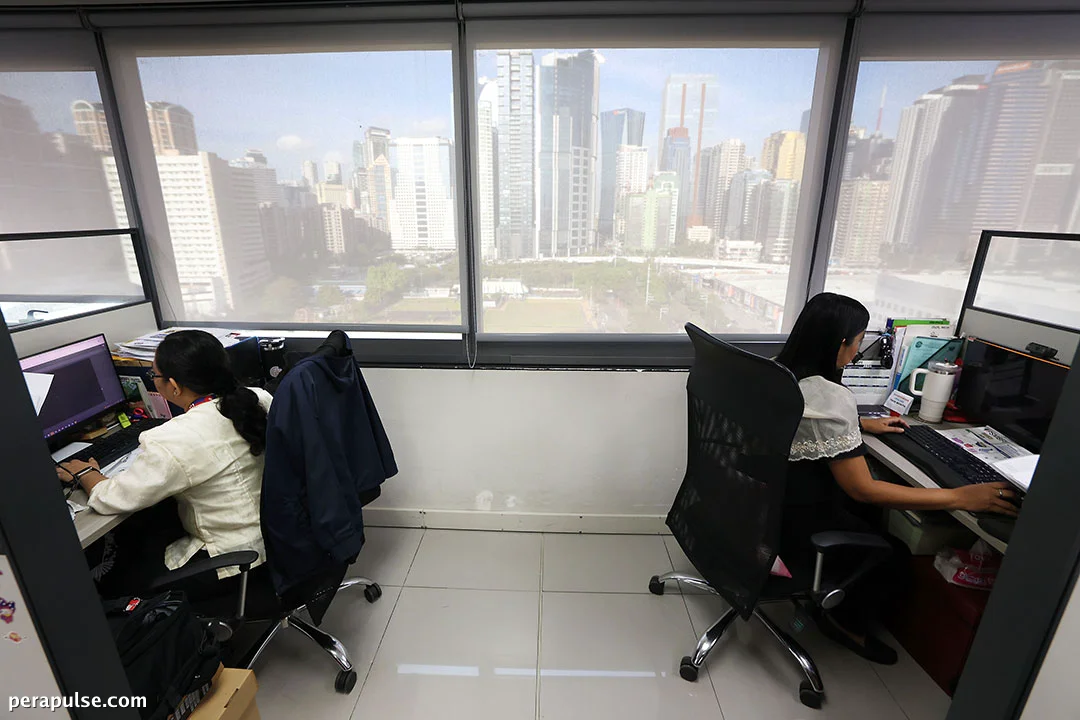
Artificial intelligence (AI) is poised to revolutionize the back-office space market in the Philippines, according to insights from Jones Lang LaSalle (JLL). The shift will favor specialized 'office laboratories' over traditional office setups.
A New Era for Back Offices
What I mean by that is... they’ll be part of an assembly line to look at, for example, the quality of chips.
Joey Radovan, Country Head, JLL Philippines
Joey Radovan, Country Head at JLL Philippines, explained that AI will automate many routine tasks, prompting employees to take on more advanced roles in tech testing. This transition will shift demand towards hybrid facilities designed for extensive equipment and quality control.
- AI will automate routine tasks, leading to role augmentation.
- Job creation is expected to follow efficiency gains, aligning with the Jevons Paradox.
- New real estate demands will arise from industries like semiconductor manufacturing.
JLL categorizes AI's impact on labor into three areas: role augmentation, selective displacement, and job creation. Rather than fearing job losses, the industry anticipates a complex restructuring of roles and spaces.
Radovan noted that the typical call center agent's role may evolve significantly. Instead of performing basic tasks, these workers might transition into quality control positions within specialized office laboratories.
The demand for these office labs aligns with initiatives like the Luzon Economic Corridor and the US-led Pax Silica initiative, which are attracting non-traditional occupiers to the Philippines.
Radovan stated, "The Philippines has made a bet by driving a new type of requirement in the form of this industrial and logistics fee... It’s attracting new types of firms."
As companies adapt to these changes, corporate real estate managers are optimizing their traditional office footprints based on actual usage data. If utilization rates are low, firms are reconsidering the necessity of large office leases.